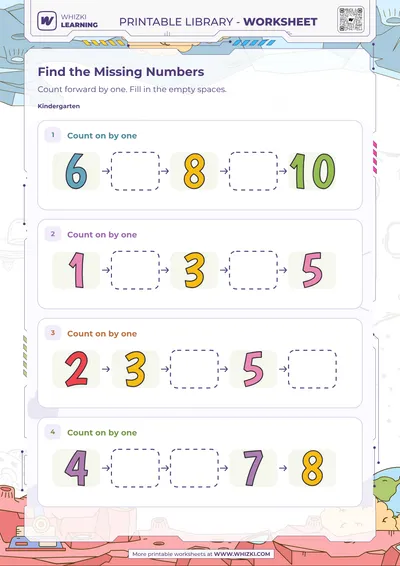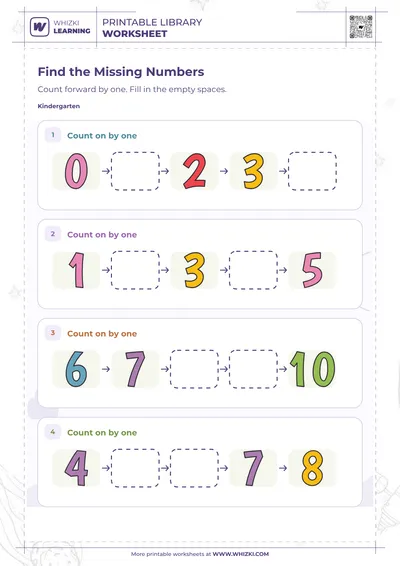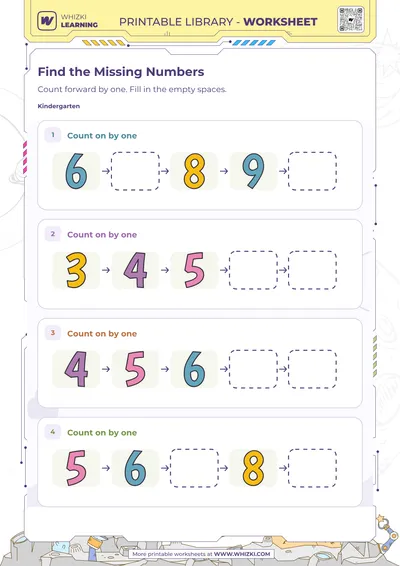


Extend a sequence by one and use neighboring printed numbers to identify each missing value.
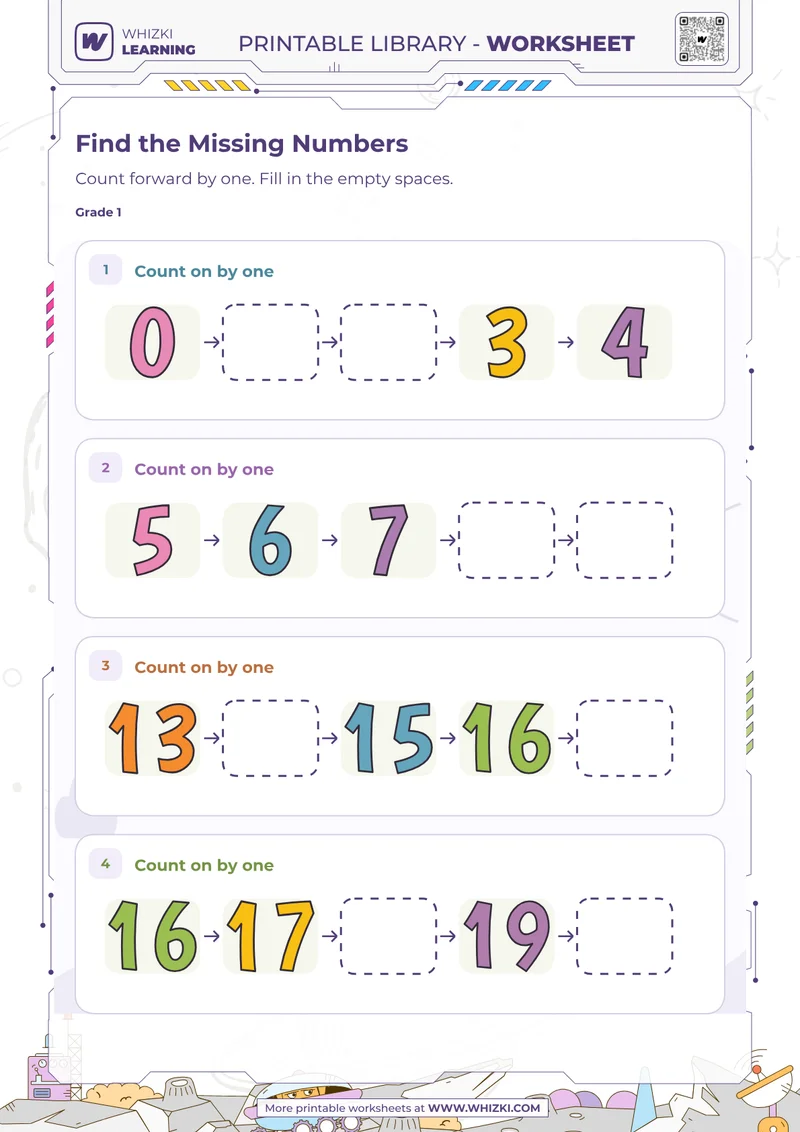
Complete the first prompt 0, __, __, 3, 4 with 1 and 2, checking the full counting sequence.
Explain a missing number by counting forward and checking the next visible value.

Use the visible numbers to work out what belongs in a gap. This missing-number counting worksheet contains 4 practice rows. Count forward by one along each trail and fill the empty spaces. The first prompt is 0, __, __, 3, 4. Read it together before writing so the child can explain what the blank represents.
For the first row, the missing numbers are 1 and 2. Start with the first visible number, count forward one step at a time, and check your filled spaces against the next printed number. Say the completed row aloud to check that all its numbers work together.
A counting trail follows a consistent step of one. If two blanks appear in the same row, fill them in sequence and use the visible numbers as checkpoints. An adult can lay out number cards or point along a short number line while the child says each step. Let the child explain one gap before moving on, and model the process again when the next row changes what must be found.
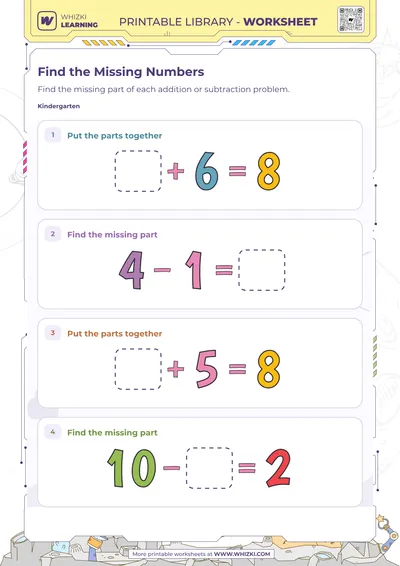
The Early Math Essentials set includes related work with number order and quantities. Explore the Addition and Subtraction set for further practice with parts and results. Complete a small selection and revisit any uncertain row together. For an off-page follow-up, arrange a few consecutive number cards and cover one for your child to identify. Check the answer by revealing the hidden number or group.
Boost your child’s skills with our discounted workbooks. Engaging activities for preschool, kindergarten, and grade 1 - now at special sale prices!


Fast shipping
Secure Payment
Licensed Teachers
For the planet
Printed in the USA
Helpful guides for parents and teachers, and tips for making learning at home super fun.

Try a calm one-week moon watch with young children: look at a regular time, sketch the visible shape, note weather gaps, and compare what changed.

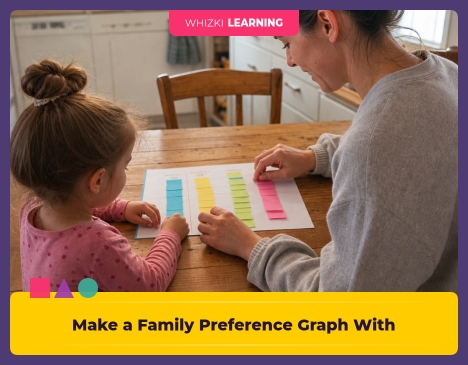
Turn a family choice into a 10-minute sticky-note graph. Children vote, compare more and fewer, and learn why a tiny sample has limits.

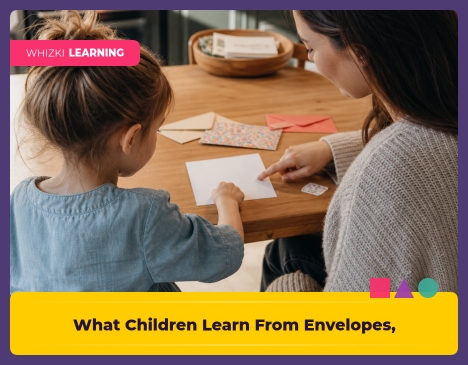
Use safe envelopes, cards, and pretend delivery play to show young children names, addresses, stamps, reading direction, and why written messages matter.

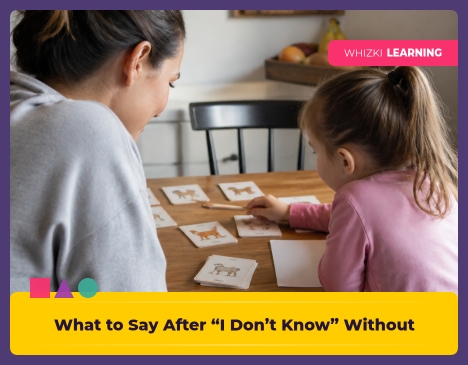
A small prompt ladder for ages 3-7: wait, notice, narrow choices, model one step, and pause, with warm language for letters, counting, and picture logic.
Get exclusive activities, expert tips, and inspiration for a more meaningful, offline family life.