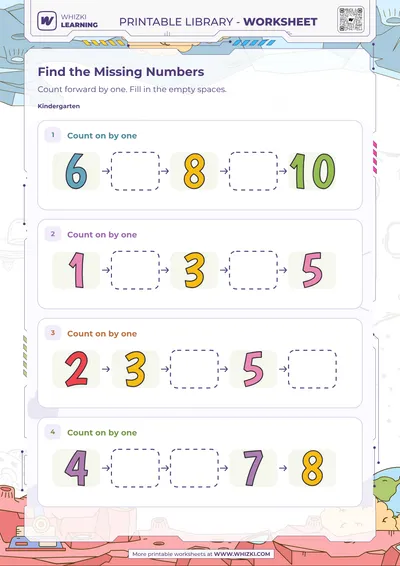
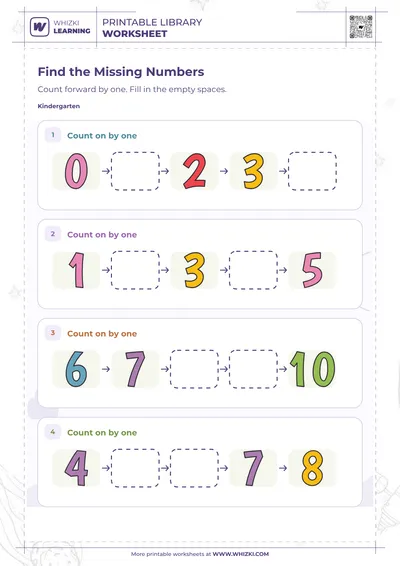
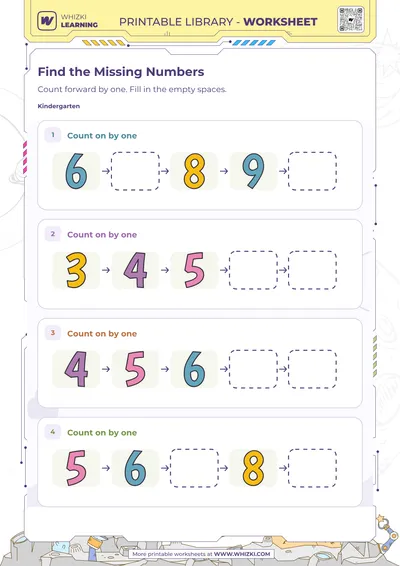
First grader → Number sequence completion → Fills missing spots by counting forward and checking neighboring numbers in each trail.
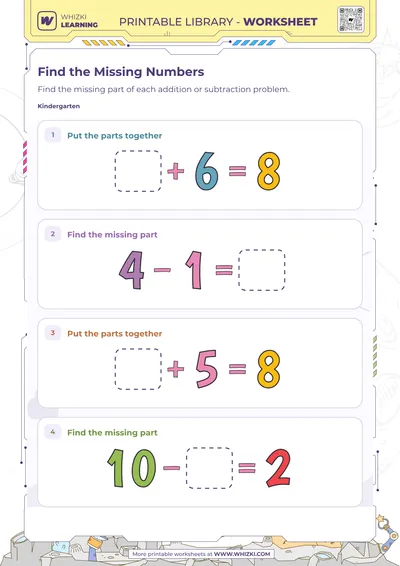
First grader → Addition fact reasoning → Finds a missing addend by reading the equation and using the completed count as support.
First grader → Subtraction fact reasoning → Identifies a missing part of a subtraction equation by comparing known numbers and checking the result.

Kids can know their numbers and still freeze when one is missing. This printable asks a first grader to complete four short number trails and four simple addition or subtraction equations. The trails count forward in order, using numbers from 2 through 15, with two blanks in each trail.
This is a good fit when a child can count forward past 10 but needs more practice noticing what comes before and after a number. Have them point to each spot and say the count aloud. If they get stuck, cover less of the trail with your hand, then uncover one space at a time so the pattern feels easier to follow.
The equation part keeps the math close and concrete. Each problem has one missing number in a basic addition or subtraction fact, such as finding the missing addend or the missing starting number. Encourage your child to read the whole equation aloud, use the number trail if it helps, and then write the missing number in the blank.
After this page, you can stay in the same number-sense lane with next whole number practice to 20, which helps children look one step ahead in a count. If reading number names is also part of your week, try matching number words to numerals so the written words connect back to the digits they already use.
Boost your child’s skills with our discounted workbooks. Engaging activities for preschool, kindergarten, and grade 1 - now at special sale prices!


Fast shipping
Secure Payment
Licensed Teachers
For the planet
Printed in the USA
Helpful guides for parents and teachers, and tips for making learning at home super fun.

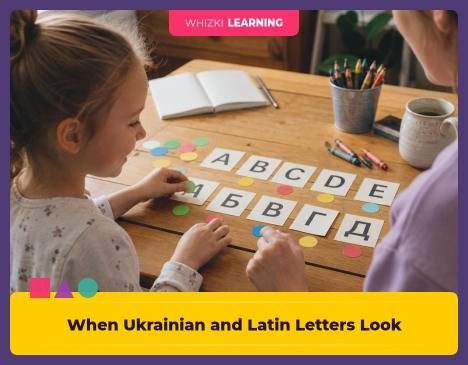
A warm, practical plan for helping ages 3-7 notice Ukrainian and Latin letter look-alikes with color cues, context, and short table routines.

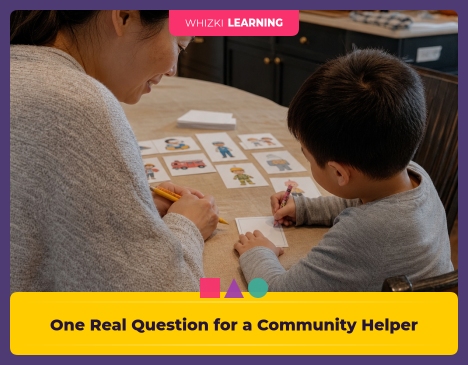
Help children ages 3 to 7 prepare one respectful question for a real community helper using a simple card, quick rehearsal, and honest context.

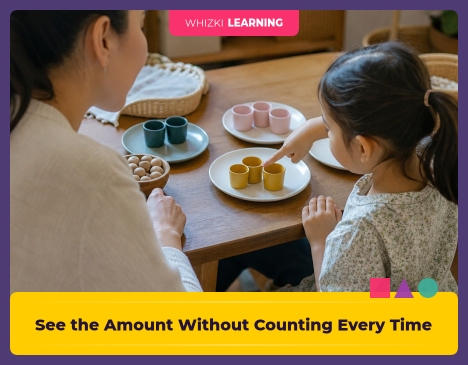
Use cups, plates, or blocks to help children ages 3-7 recognize small amounts without counting each object, in a quick table routine.

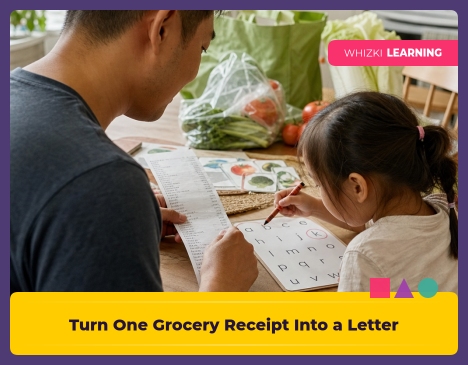
Use a grocery receipt for a short, screen-free letter hunt that compares uppercase and lowercase, spots repeated words, and stops before print feels tiring.
Get exclusive activities, expert tips, and inspiration for a more meaningful, offline family life.