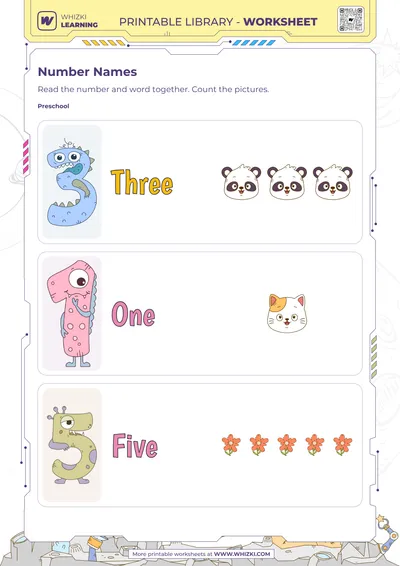
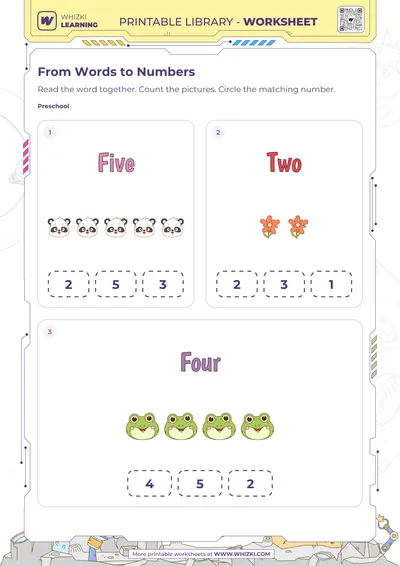
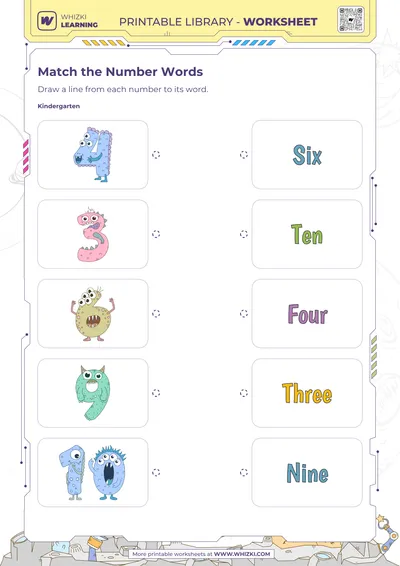
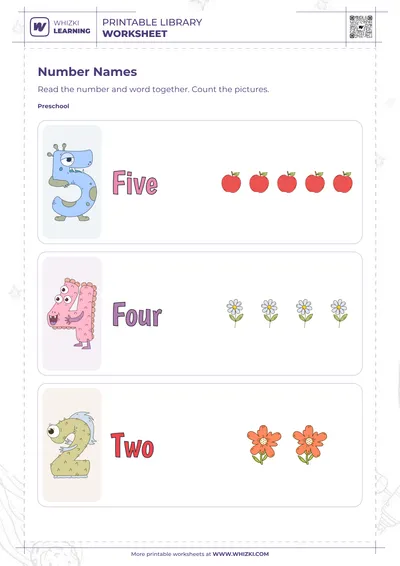
Number cards → Numeral reading → Names 4, 1, 5, 10, 2, and 6 with adult support.
Selected numerals → Visual recognition → Notices written number forms and connects each symbol to its spoken number name.
Shared reading routine → Focused math practice → Points to one card at a time and reads the number aloud.

Five-year-olds can know a number in one place and still hesitate when it shows up by itself. This printable gives a small, friendly set of number cards to read together: 4, 1, 5, 10, 2, and 6. Sit side by side, point to one card at a time, and say the number name out loud.
This page is a good fit when a kindergartener is beginning to connect written numerals with spoken number names. The set is limited on purpose, so there is room to slow down, notice the shapes, and reread without rushing. It is not a full one through ten chart; it is focused practice with six selected numerals.
As you read each card, invite your child to look closely before saying the number. If 6 and 10 feel trickier than 1 or 2, pause there and model the name again in a calm voice. For a next step that connects numerals to quantities, try the animal counting and number choice worksheet. When you want to practice number order after recognition, the missing numbers kindergarten worksheet gives a simple follow-up.
Keep the first round short, especially if your child starts guessing. You can say, “This is 6. Let’s read it together,” then move on instead of drilling. Later, reuse the page by reading the same cards again or asking your child to find one named number, such as Find 5. End with one number they read comfortably, so the practice feels doable.
Boost your child’s skills with our discounted workbooks. Engaging activities for preschool, kindergarten, and grade 1 - now at special sale prices!


Fast shipping
Secure Payment
Licensed Teachers
For the planet
Printed in the USA
Helpful guides for parents and teachers, and tips for making learning at home super fun.

Picture labels can build meaning, first-sound attention, or guessing habits. Use this parent-friendly decision tree to know when to cover or reveal the picture.

A vague school screening notice can leave families guessing, so start with seven plain questions about the test, timing, language, evidence, and next steps.

A field note on the May 2026 move to one shared worksheet generator API, with a simple parent preview for print consistency and handwriting comfort.

A seven-minute apple observation helps children compare color, stem, skin, weight, smell, and a cut surface, then draw what children noticed before any craft begins.
Get exclusive activities, expert tips, and inspiration for a more meaningful, offline family life.