Learning Outcomes
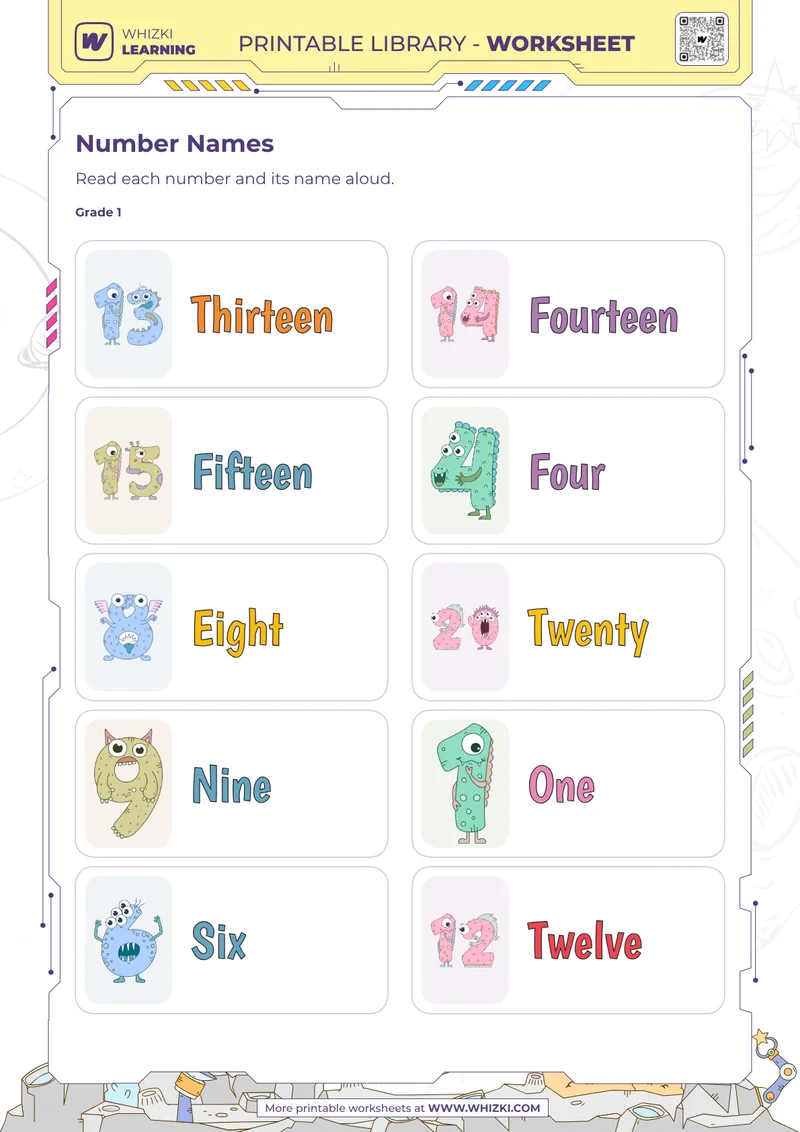
Number cards → Read numerals and number words → Child connects 13, 14, 15, 4, 8, 20, 9, 1, 6, and 12.
Mixed number set → Notice order changes → Child recognizes one-digit and two-digit numbers without relying on a counting chart.
Shared card reading → Say numbers aloud → Child builds confidence naming number cards during short, screen-free practice with an adult.

Number Cards Reading Worksheet
The number cards reading worksheet gives first graders a selected set of ten number cards: 13, 14, 15, 4, 8, 20, 9, 1, 6, and 12. The page practices reading numerals, saying number words, and noticing one-digit and two-digit numbers in a mixed order.
At age six, many children can count in order but pause when numbers appear out of order. A child may say thirteen smoothly during counting, then stall on 13 when the card stands alone.
Sit beside your child and read each card together. Point to 13 and say thirteen, then ask your child to find 14, 15, and 20, because teen numbers often need an extra look. For 4, 8, 9, 1, 6, and 12, invite your child to clap or place small objects to match the number.
The worksheet is useful because the page is not a complete 1 to 20 chart. The mixed selection keeps attention on reading each card instead of reciting a memorized sequence. A small set also feels less busy than a full chart, which helps a bored or wiggly first grader finish one calm practice round.
Limited-time savings
on Whizki workbooks.
Boost your child’s skills with our discounted workbooks. Engaging activities for preschool, kindergarten, and grade 1 - now at special sale prices!


Fast shipping
Secure Payment
Licensed Teachers
For the planet
Printed in the USA
Find fresh ideas
To help your little learners grow!
Helpful guides for parents and teachers, and tips for making learning at home super fun.

A field note on the May 2026 move to one shared worksheet generator API, with a simple parent preview for print consistency and handwriting comfort.

A seven-minute apple observation helps children compare color, stem, skin, weight, smell, and a cut surface, then draw what children noticed before any craft begins.

A field note on why Ukrainian-English workbook pages need fresh design choices for letters, examples, space, and language-specific skills.

A fast weather window journal helps ages 3-7 notice sky and temperature feeling with simple symbols, compare a few days, and learn observation versus forecast.
Join the Screen-Free Movement.
Get exclusive activities, expert tips, and inspiration for a more meaningful, offline family life.