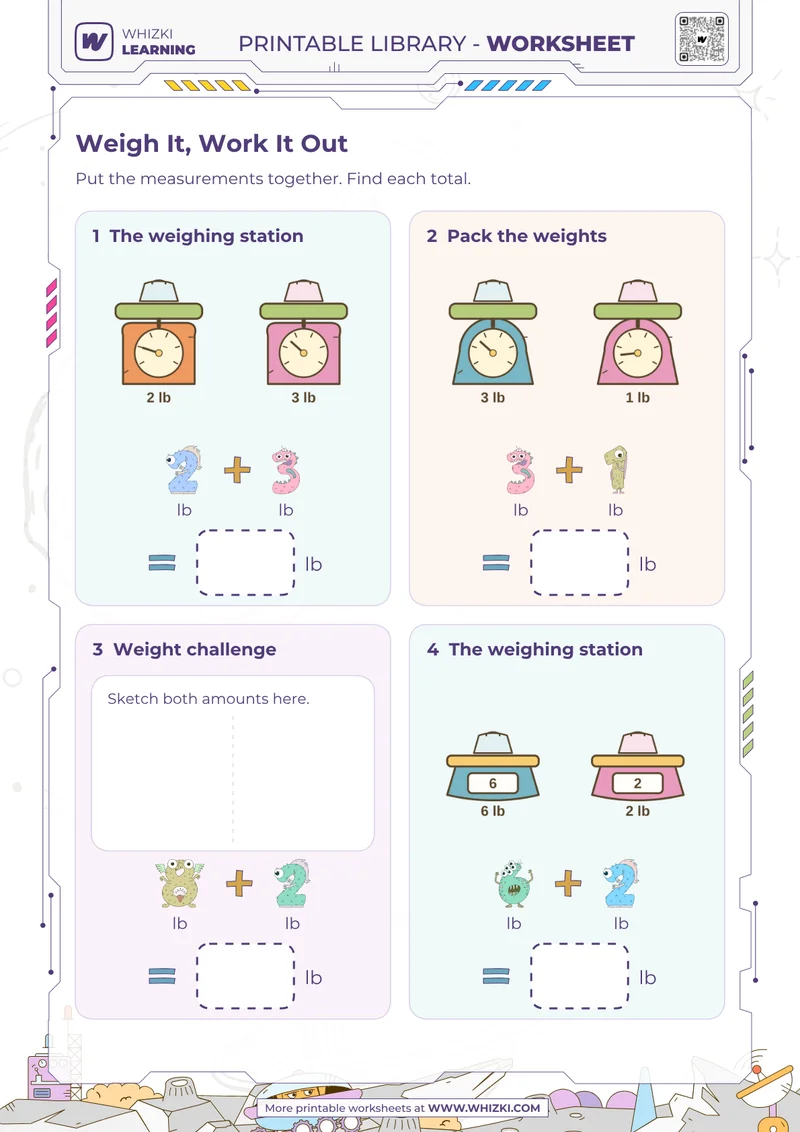


Pound addition problems → Adding measured quantities → Writes the total in lb after combining the two shown amounts.
Illustrated measurement models → Reading saved quantities → Connects each picture model to the numbers used in the problem.
Adult-guided checking → Comparing sums → Notices when an answer seems too small or too large for the lb amounts.

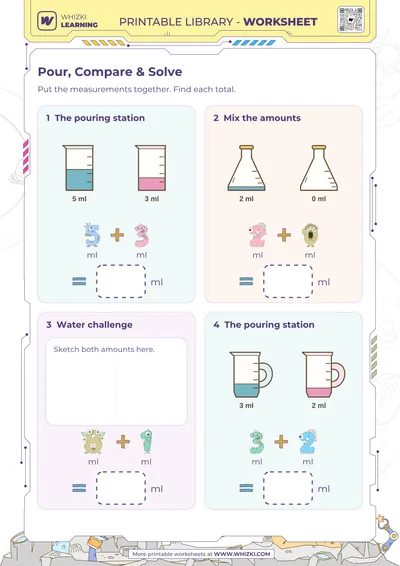
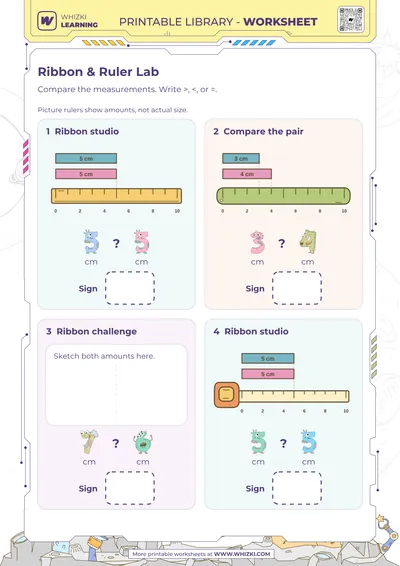
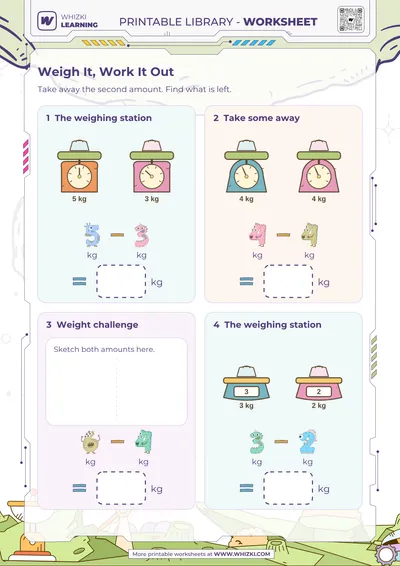
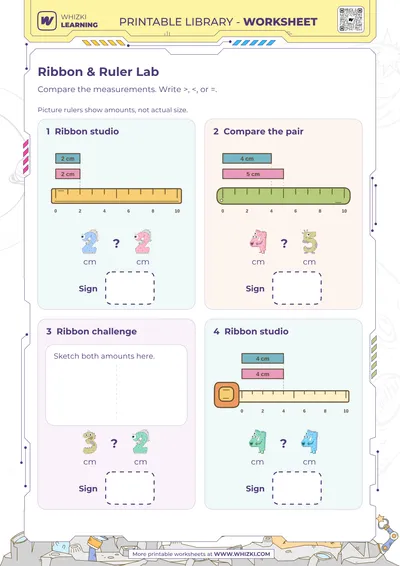
Measurement can feel fuzzy at five, especially when a child has to hold on to the number and the unit at the same time. This page keeps it small: four addition problems in lb, each paired with an illustrated ruler, scale, or measuring container that shows the saved quantities.
The pictures are models, not life-size measuring tools, so use them as clues instead of real measuring equipment. A kindergartener is ready when they can count small groups, recognize written numbers, and say that lb means pounds with a little reminder.
Sit together and read one problem aloud. Point to each shown amount, add the two pound amounts, and write the total. Then ask, “Does our total make sense?” Since addition combines amounts, the answer should be bigger than either part, which gives a simple comparison check.
If the addition feels comfortable, try changing the action next. A pound subtraction measurement page lets your child take pounds away using the same unit, and a kilogram subtraction measurement page adds a different unit name when they are ready for a new label.
Boost your child’s skills with our discounted workbooks. Engaging activities for preschool, kindergarten, and grade 1 - now at special sale prices!


Fast shipping
Secure Payment
Licensed Teachers
For the planet
Printed in the USA
Helpful guides for parents and teachers, and tips for making learning at home super fun.

Use one Halloween worksheet in a calm 15-minute flow: preview, try, talk with objects, then stop and store, with age adjustments for preschool and kindergarten.

A simple plan for turning one grandparent memory into a bilingual keepsake page with exact words, a child drawing, and clear privacy boundaries.

A practical guide for inviting family stories about names, language, music, routines, celebrations, and places without putting children on display.

Turn a quick room search into early geometry talk by asking about sides, corners, curves, and shapes inside everyday objects.
Get exclusive activities, expert tips, and inspiration for a more meaningful, offline family life.