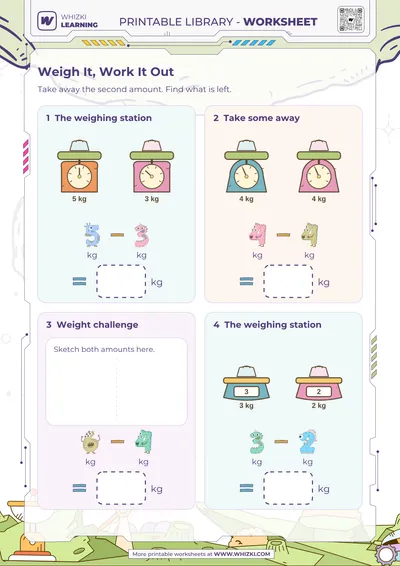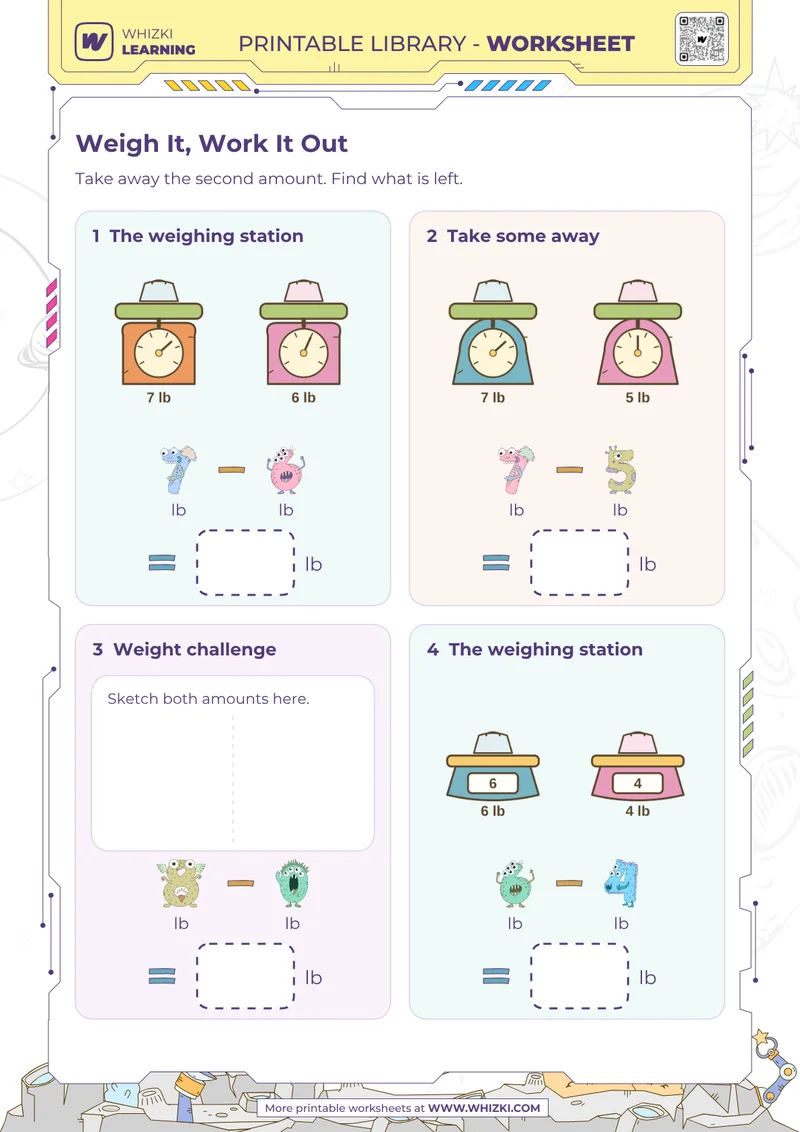


Pound amounts → Subtract in lb → Finds how many pounds remain after taking away a saved quantity.
Picture models → Connect quantities to subtraction → Uses the shown amounts to check each pound subtraction problem.
Comparison language → Notice more or less → Talks about which pound amount is larger before subtracting.

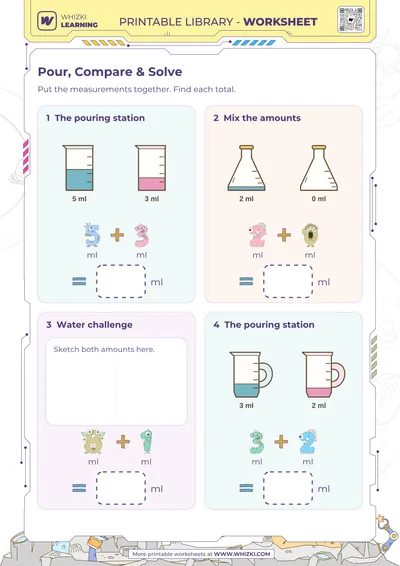
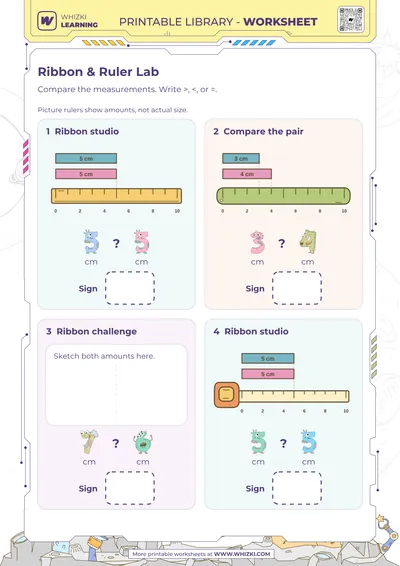
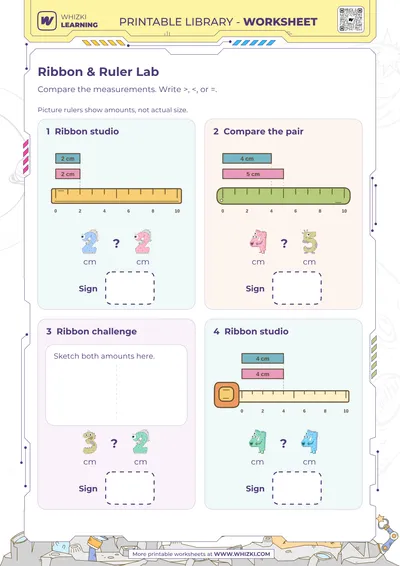
Six-year-olds often understand “heavy” and “light” before the written unit makes sense. This page gives four pound subtraction problems in lb, with matching picture models so the numbers feel connected to a real measurement idea.
It works best when a child can count, recognize numerals, and has tried simple take-away stories. The pictures are models, not life-size measuring tools, so keep the focus on the printed amounts and the lb label rather than measuring the objects at home.
Sit beside your child and read each problem together. Ask which printed pound amount is greater, then have your child subtract the amount being taken away and write the difference. If the answer feels slippery, use fingers, small counters, or a quick number line in the margin to count back step by step.
For a next step, stay with pounds and switch the operation using this pound addition measurement worksheet, which helps children see the same unit in a joining problem. When you want to compare how labels change across measurement work, try the centimeter addition measurement worksheet and talk about how cm and lb name different kinds of measures.
Boost your child’s skills with our discounted workbooks. Engaging activities for preschool, kindergarten, and grade 1 - now at special sale prices!


Fast shipping
Secure Payment
Licensed Teachers
For the planet
Printed in the USA
Helpful guides for parents and teachers, and tips for making learning at home super fun.

Use one Halloween worksheet in a calm 15-minute flow: preview, try, talk with objects, then stop and store, with age adjustments for preschool and kindergarten.

A simple plan for turning one grandparent memory into a bilingual keepsake page with exact words, a child drawing, and clear privacy boundaries.

A practical guide for inviting family stories about names, language, music, routines, celebrations, and places without putting children on display.

Turn a quick room search into early geometry talk by asking about sides, corners, curves, and shapes inside everyday objects.
Get exclusive activities, expert tips, and inspiration for a more meaningful, offline family life.