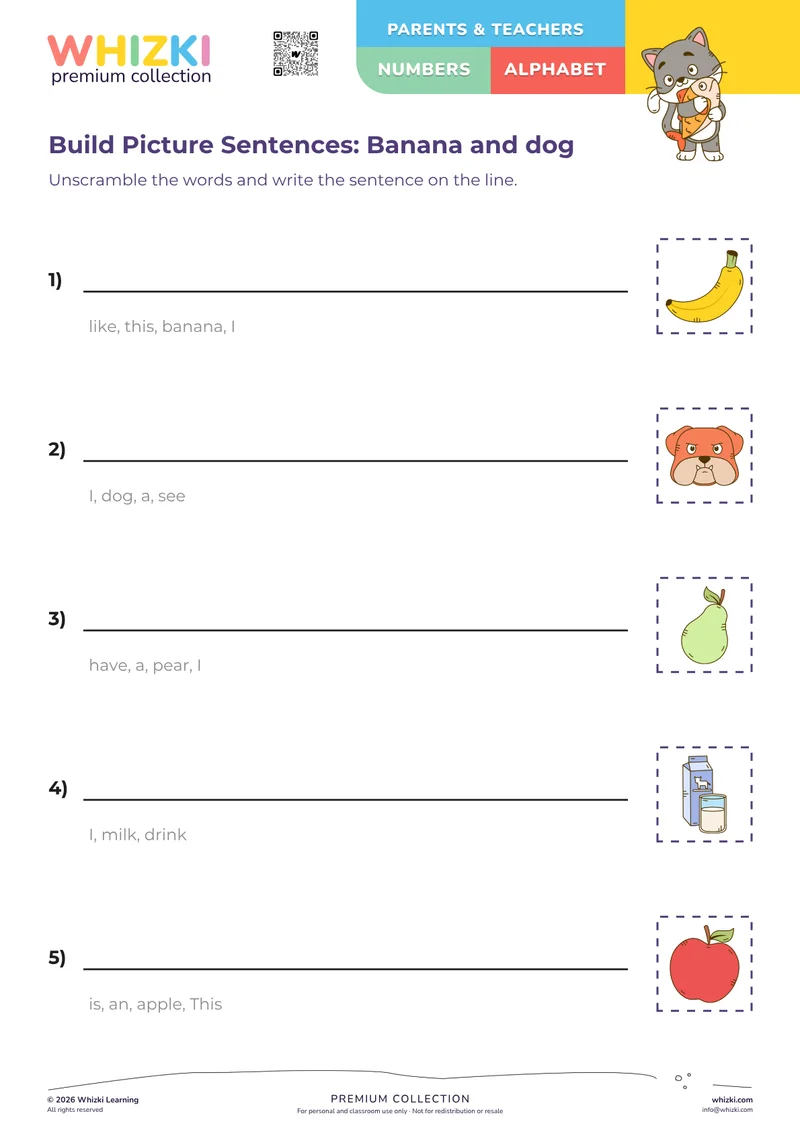
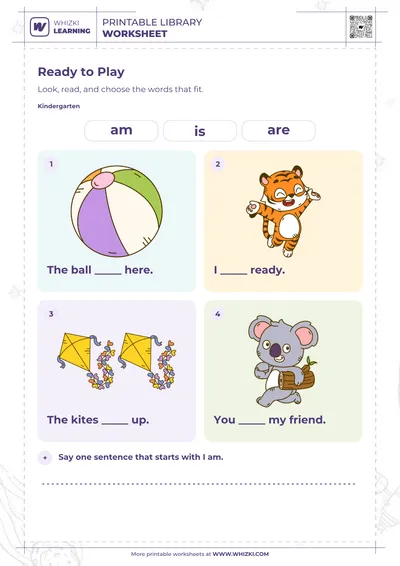
This sentence building worksheet gives children five rows of mixed-up words with a picture cue and a writing line. Put the words into a meaningful order, then write and read the completed sentence. The picture cues include banana, dog, pear, with two more examples on the page. Read the available words aloud together before asking for an independent written answer.
One intended sentence is “I like this banana.” Look for the word with its starting capital and think about which words belong together. Say a possible arrangement aloud before writing, using every supplied word once. The picture supports the sentence topic; the word choices provide the information needed to build the actual statement. Check that the finished sequence makes sense as a complete sentence.
An adult can write the supplied words on small paper slips so the child can move them before copying the final order. Point through the spoken sentence from left to right, leave spaces between written words, and add the ending period. Read the result back together and compare it with the original word list, checking that none were omitted or used twice.
Explore the Spelling and Word Building Pack for related written-word activities. The Early Words: Reading and Spelling pack offers other supported reading practice. After completing a row, say a different sentence about the same picture as a separate conversation. Keep the printed word-order task clear, then use the follow-up to show how familiar words can express another idea.