Learning Outcomes
Identify useful choices for specific purposes. The picture choices help children connect water with thirst and a drum with rhythm.
Compare needs and wants in a familiar market setting. The activity asks children to think about what each friend is trying to do before choosing.
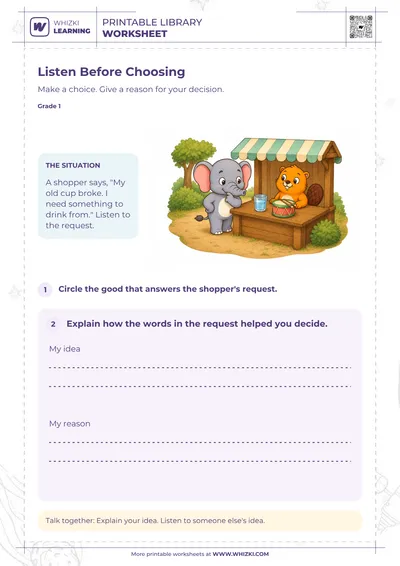
Explain a reason for a choice. Children practice using simple response stems to say what they picked and why it makes sense.

Choose Useful Things for Two Market Friends
When a child insists every choice is the right choice, talking about needs and wants can feel surprisingly tricky. This page gives you a calm, screen-free way to practice why two people may choose different items for different purposes, without turning it into a long lecture.
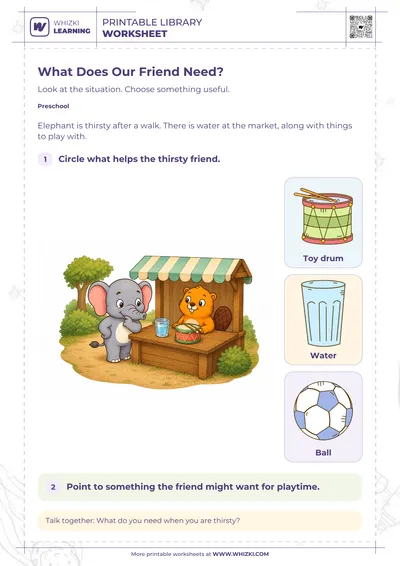
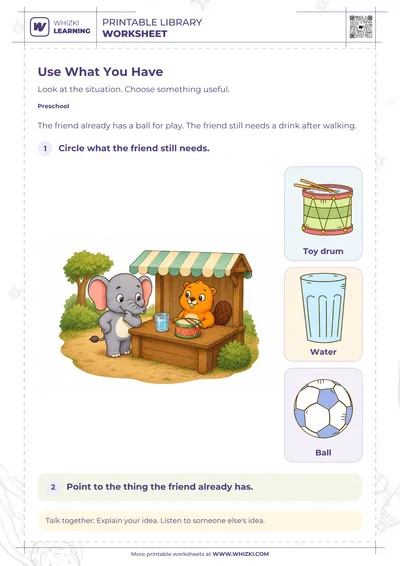
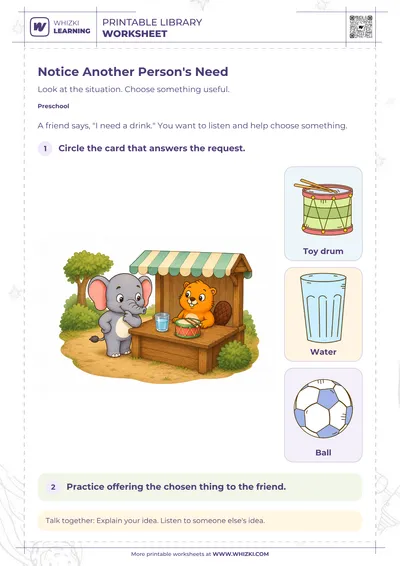
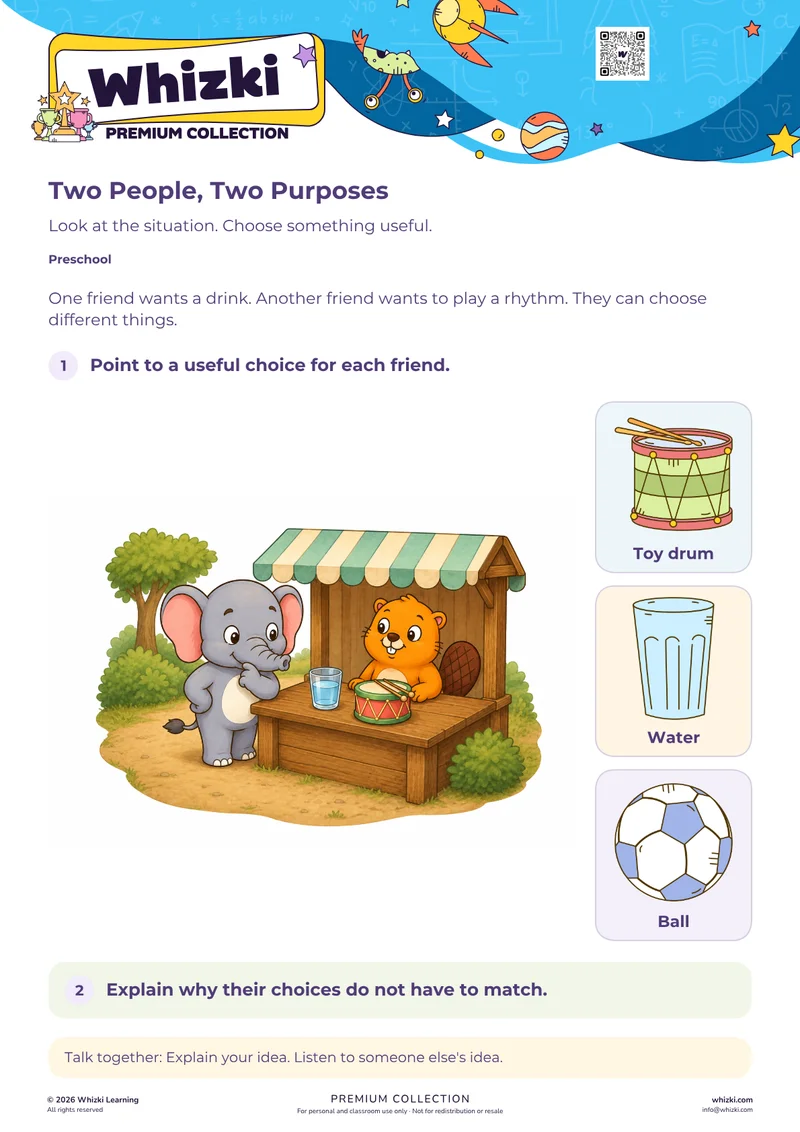
Children look at a market scene with an elephant friend and three picture choices: water, a drum, and a ball. One friend wants a drink, and another friend wants to play a rhythm. Kids point to the useful choice for each person, then explain why the choices do not have to match.
Use the worksheet like a mini conversation mat. Read the story aloud, invite your child to circle or color the choices, and prompt a sentence such as, My idea is water because it helps with thirst. Then ask, What would you choose for rhythm?
This printable belongs to Preschool Social Studies Adventures in the Whizki Plus tier. The set explores everyday social studies through illustrated preschool activities, including needs, wants, community places, choices, fairness, and listening to another person's idea.
Keep it short and concrete. Spend 5-10 minutes naming the pictures, choosing for each friend, and sharing one reason. If your child is tired, stop after the pointing task and save the explanation for later.
Limited-time savings
on Whizki workbooks.
Boost your child’s skills with our discounted workbooks. Engaging activities for preschool, kindergarten, and grade 1 - now at special sale prices!


Fast shipping
Secure Payment
Licensed Teachers
For the planet
Printed in the USA
Find fresh ideas
To help your little learners grow!
Helpful guides for parents and teachers, and tips for making learning at home super fun.

A seven-minute apple observation helps children compare color, stem, skin, weight, smell, and a cut surface, then draw what children noticed before any craft begins.

A field note on why Ukrainian-English workbook pages need fresh design choices for letters, examples, space, and language-specific skills.

A fast weather window journal helps ages 3-7 notice sky and temperature feeling with simple symbols, compare a few days, and learn observation versus forecast.

A five-minute snack sort turns crackers, berries, or allergy-friendly objects into early data practice as children sort, count, compare, and clean up.
Join the Screen-Free Movement.
Get exclusive activities, expert tips, and inspiration for a more meaningful, offline family life.