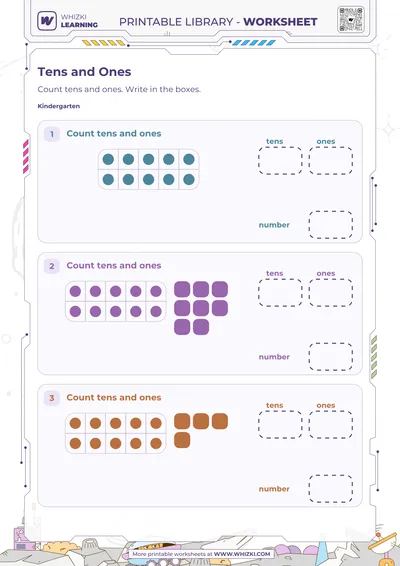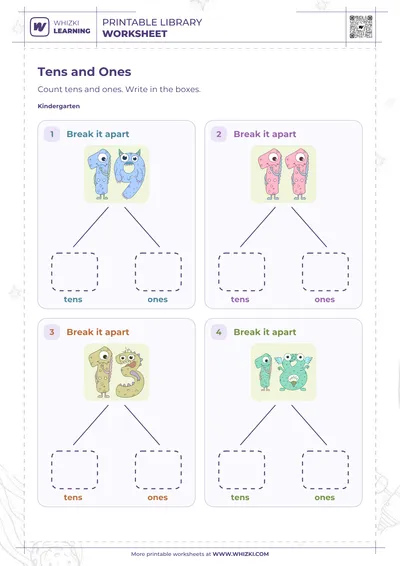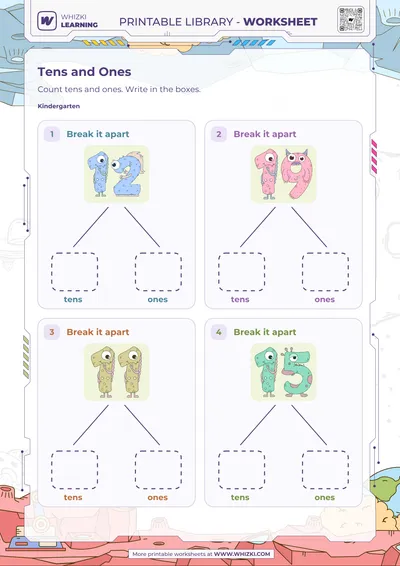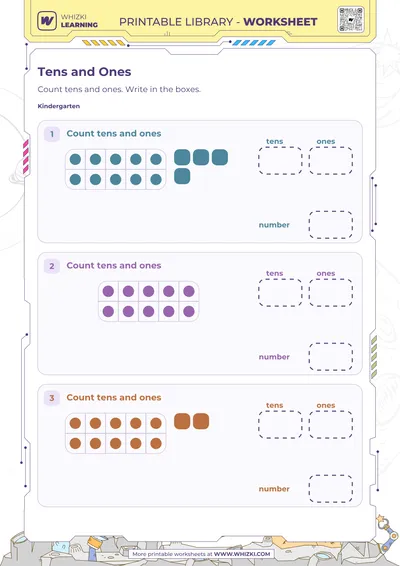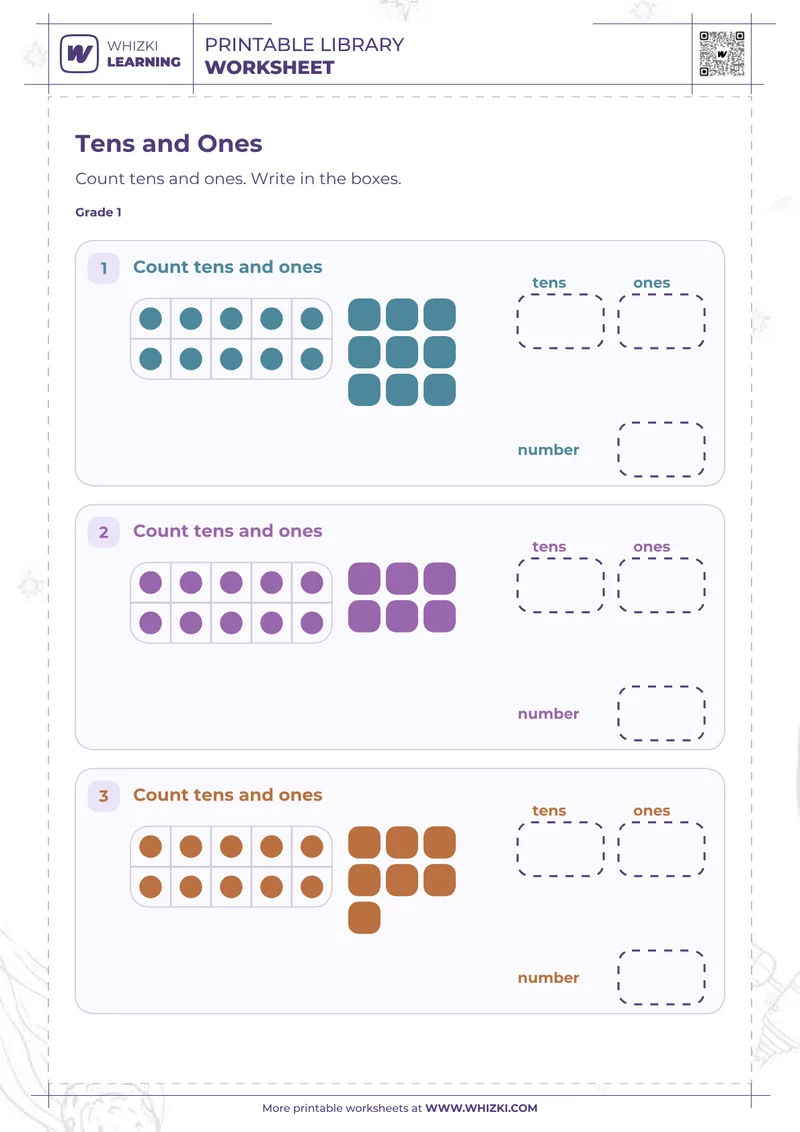


Teen numbers → Place value recognition → Identifies the tens digit and ones digit in 16, 17, and 19.
Visual models → Number building → Connects each shown model to 1 ten and the correct number of ones.
Writing fields → Math recording → Writes tens and ones amounts clearly for each given teen number.

Teen numbers can trip kids up because the first digit does a lot of work. On this printable page, your child looks at three numbers, 19, 16, and 17, and uses the learning models and writing fields to show how each number is made from tens and ones.
This is a good fit for a first grader who can count past 20 and is ready to slow down and look inside a number. If the idea feels new, start with the number 16. Say, “Sixteen has 1 ten and 6 ones,” then let your child write the parts before trying 17 and 19.
The practice is simple on purpose. Each item asks your child to connect the written number to its place value parts, such as 1 ten and 9 ones for 19. If counting still needs a warm-up, try the count and draw circles worksheet first because it keeps the focus on one-to-one counting before place value.
Sit nearby and ask, “How many tens?” and “How many ones are left?” rather than giving the answer right away. When this page feels comfortable, move to the find the missing numbers worksheet to help your child use number order with the same teen-number confidence.
Boost your child’s skills with our discounted workbooks. Engaging activities for preschool, kindergarten, and grade 1 - now at special sale prices!


Fast shipping
Secure Payment
Licensed Teachers
For the planet
Printed in the USA
Helpful guides for parents and teachers, and tips for making learning at home super fun.

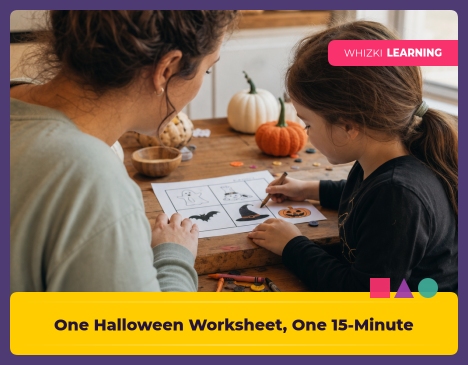
Use one Halloween worksheet in a calm 15-minute flow: preview, try, talk with objects, then stop and store, with age adjustments for preschool and kindergarten.

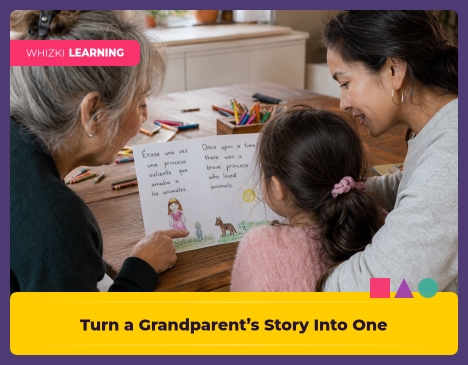
A simple plan for turning one grandparent memory into a bilingual keepsake page with exact words, a child drawing, and clear privacy boundaries.

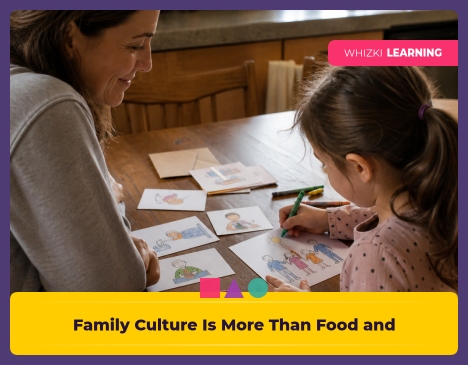
A practical guide for inviting family stories about names, language, music, routines, celebrations, and places without putting children on display.

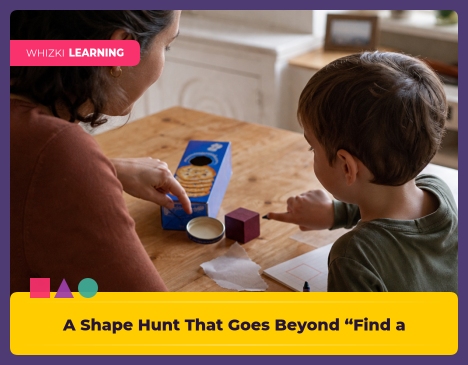
Turn a quick room search into early geometry talk by asking about sides, corners, curves, and shapes inside everyday objects.
Get exclusive activities, expert tips, and inspiration for a more meaningful, offline family life.