Number Compare Kindergarten Worksheet 
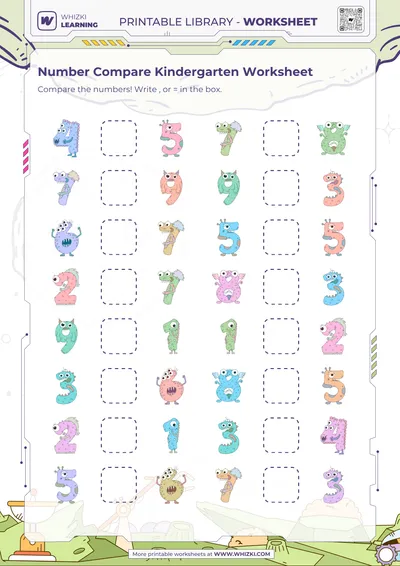
Five-year-olds can know their numbers and still pause when asked which one is bigger. This page gives a simple, screen-free way to practice comparing two numbers and choosing greater, smaller, or equal.
Little Math Stories Addition and Subtraction Worksheet 
Five-year-olds can know how to count but still freeze when a story asks what changed. This printable gives them three tiny math stories to read, act out, and solve with you.
Little Math Stories Addition and Subtraction Worksheet 
Five-year-olds can freeze when numbers show up without a story. This printable uses flowers, frogs, and apples to practice simple addition and subtraction in a way you can talk through together.
Make Ten Ten Frames Worksheet 
Five-year-olds can understand ten better when they can see it, not just hear it. This printable uses ten frames and simple writing fields to practice making ten with three number pairs.
Compare Numbers Worksheet for First Grade 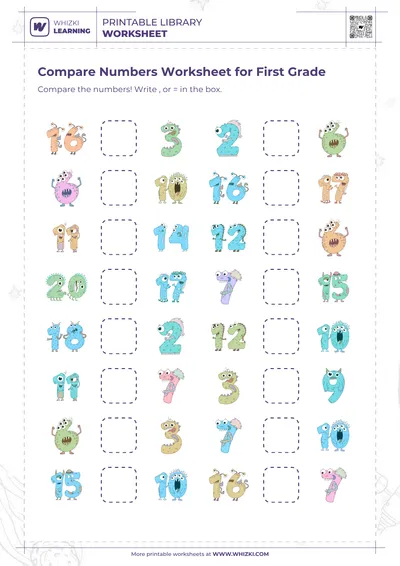
Kids can know how to count and still stall when two numbers sit side by side. This first grade comparison page gives them a simple, screen-free way to decide which number is greater, smaller, or equal.
Count and Draw Circles Worksheet 
Kids often know the count but still draw one too many or one too few. This Whizki Learning worksheet keeps it simple: count one circle group, then draw two circle groups to match the requested amounts.
Feet Measurement Comparison Worksheet 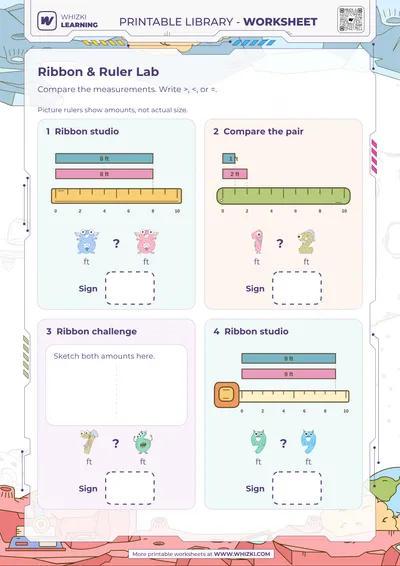
Kids can stall when measurement feels too abstract. This printable gives them four feet comparison problems with picture models, so you can sit together and talk through which amount is longer or shorter.
Next Whole Number to Ten Worksheet 
Five-year-olds can count out loud and still pause when a printed number asks what comes next. This page gives them a short, screen-free way to choose the next whole number up to 10.
Make Ten Ten Frames Worksheet 
Making 10 can feel obvious one minute and slippery the next. This one-page ten-frame worksheet gives your first grader a clear place to trace the idea, count the parts, and write the matching numbers.
Pound Subtraction Measurement Worksheet 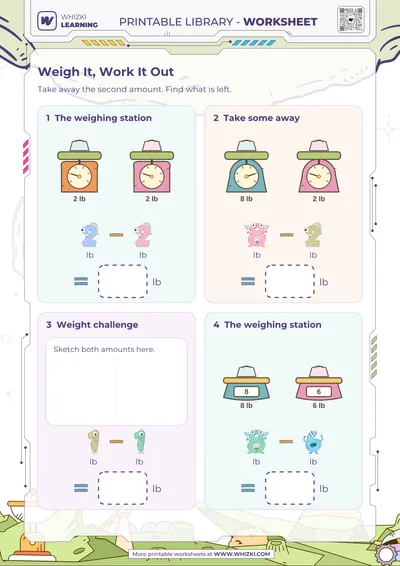
Five-year-olds can understand take-away math, then stall when a unit like lb shows up. This printable gives them four pound subtraction problems with picture models, so you can sit together and talk through what is left.
Number Words to Numerals Worksheet 
Kids may count out loud with confidence, then pause when a number word shows up in print. This page keeps practice short and clear: read each word, then write the matching numeral.
Centimeter Subtraction Worksheet 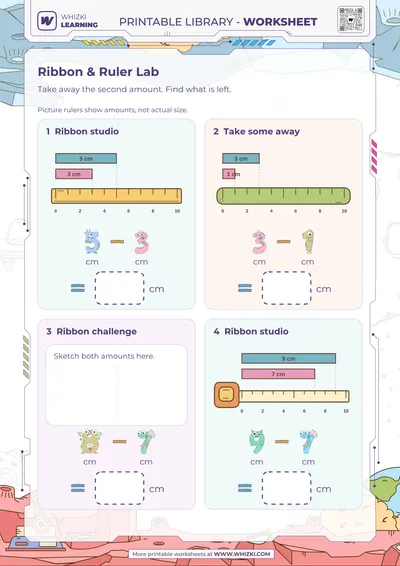
Kids can count confidently and still pause when a measurement has centimeters attached. This printable gives them four short subtraction problems in cm, with picture models to help the numbers feel less floating.
Pound Comparison Worksheet 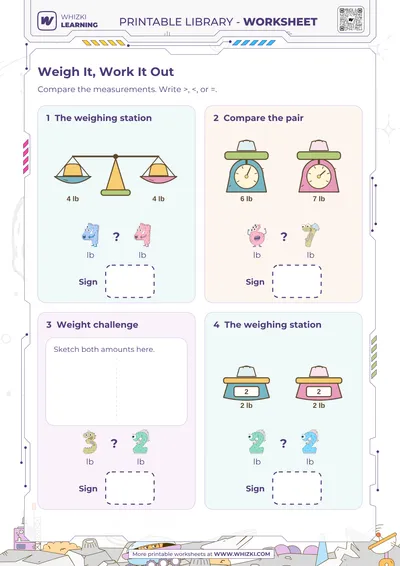
Five-year-olds can mix up measurement words, especially when a picture looks like it should tell the whole story. This page keeps it simple with four pound comparison problems and clear lb labels to read together.
Next Number to Five Worksheet 
Three-year-olds often count out loud before they can name what comes next on paper. This printable gives them a short, screen-free way to choose the next whole number, with answers no higher than 5.
Centimeter Comparison Worksheet 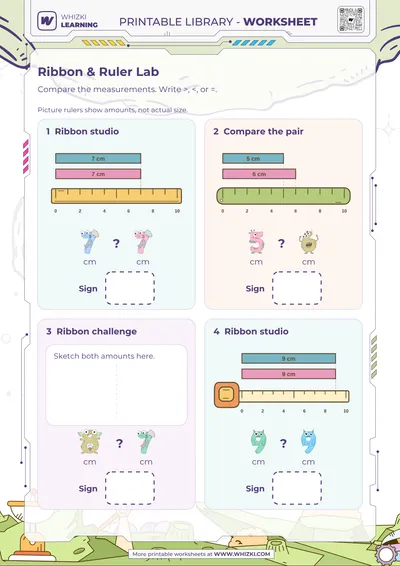
Kids can know their numbers and still stall when the unit changes. This printable gives them four simple centimeter comparisons to read, think through, and answer with you.