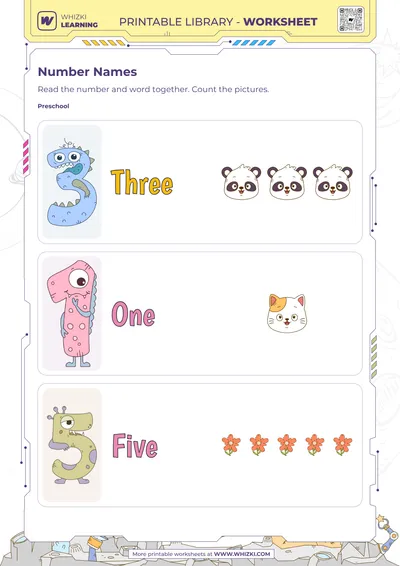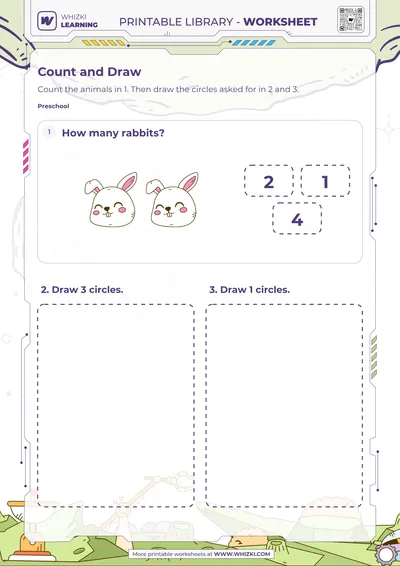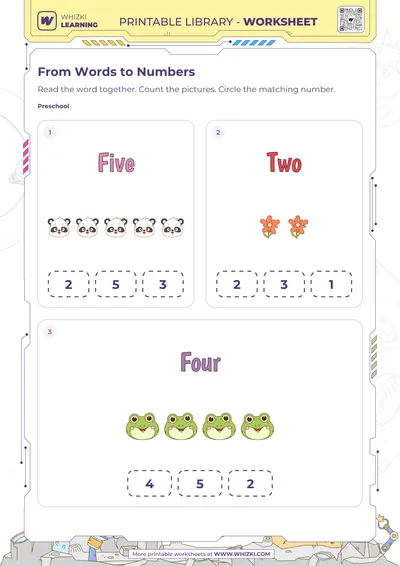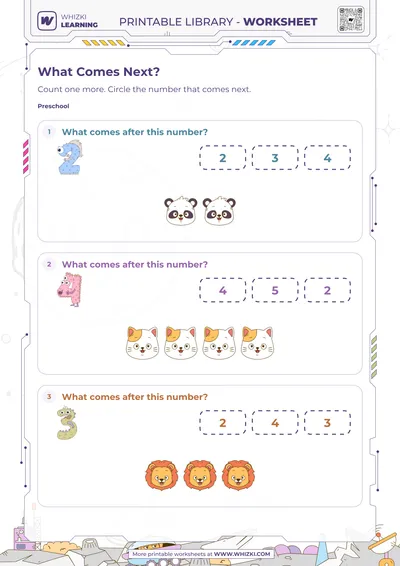
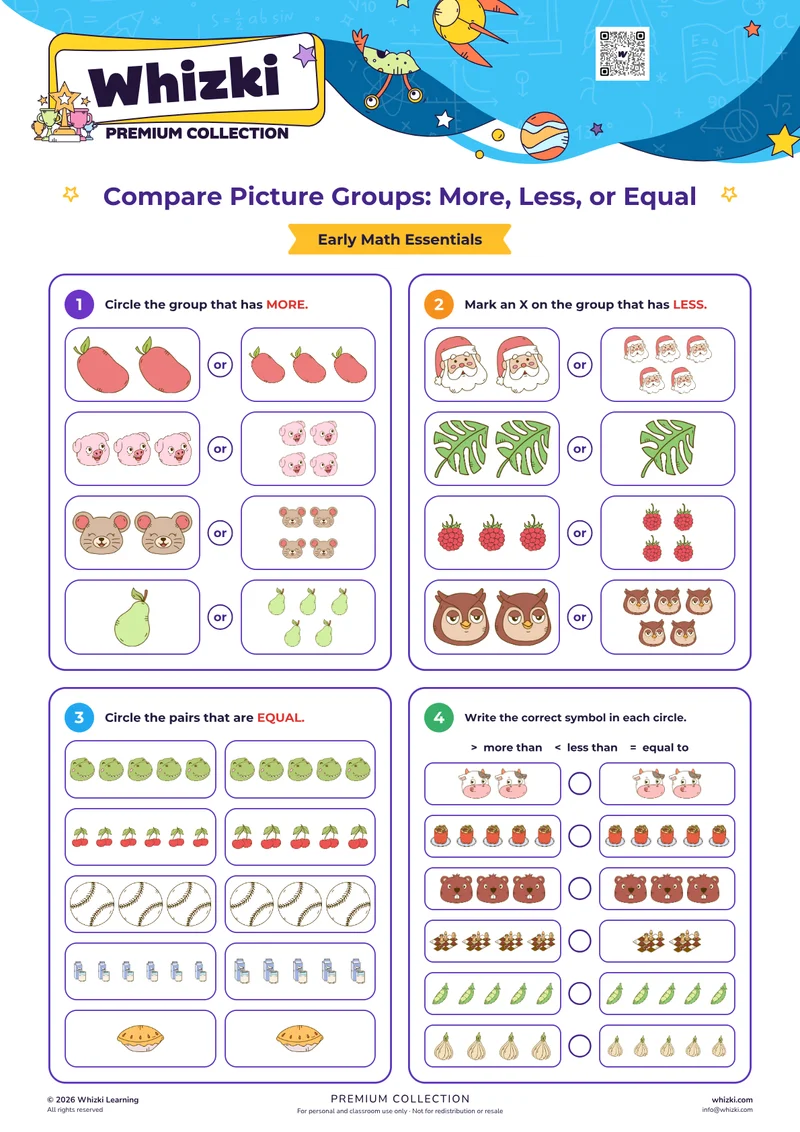


Compare small picture groups by counting or pairing objects one to one, identifying the greater and smaller quantities.
Recognize equal quantities even when the pictures or their arrangement differ, explaining that equal means the same number.
Translate a comparison of two groups into a greater-than, less-than, or equal-to symbol and read the relationship from left to right.

This comparing quantities worksheet uses four panels to practice more, less, and equal. Circle the larger group in 4 rows, mark the smaller group with an X in 4 rows, and circle equal pairs in 5 rows. The final 6 comparisons ask for a greater-than, less-than, or equal-to symbol between two picture groups.
In the first row, compare 2 pictures with 3. Count each group or pair the pictures one to one to see which group has extras. Focus on quantity, rather than how much space the pictures cover. Read each new panel’s instruction together, because the child changes from choosing more to marking less and then looking for equal amounts.
For equal pairs, check whether both groups contain the same number of pictures. In the symbol panel, say the two quantities aloud before choosing a sign. The open side of a greater-than or less-than sign faces the larger amount; the equals sign means both amounts have the same value. Read the completed comparison from left to right to check its meaning.
Revisit written numerals in the number reference library, or choose another picture-based activity from Early Math Essentials. Two small groups of counters can make a useful hands-on follow-up. Ask the child to move them into pairs and explain which side has more, which has less, or why the two groups are equal before returning to a printed row.
Boost your child’s skills with our discounted workbooks. Engaging activities for preschool, kindergarten, and grade 1 - now at special sale prices!


Fast shipping
Secure Payment
Licensed Teachers
For the planet
Printed in the USA
Helpful guides for parents and teachers, and tips for making learning at home super fun.

A warm decision guide for asking how a preschool or kindergarten screening handles testing language, interpretation, observations, and home-language evidence.

Use one familiar snack to build science talk and vocabulary without pressure to taste. This kitchen-table investigation honors allergies, texture needs, and child choice.

Help young children measure with paper clips before a ruler, using equal units, clear endpoints, and quick fixes for gaps, overlaps, and different answers.

Picture labels can build meaning, first-sound attention, or guessing habits. Use this parent-friendly decision tree to know when to cover or reveal the picture.
Get exclusive activities, expert tips, and inspiration for a more meaningful, offline family life.