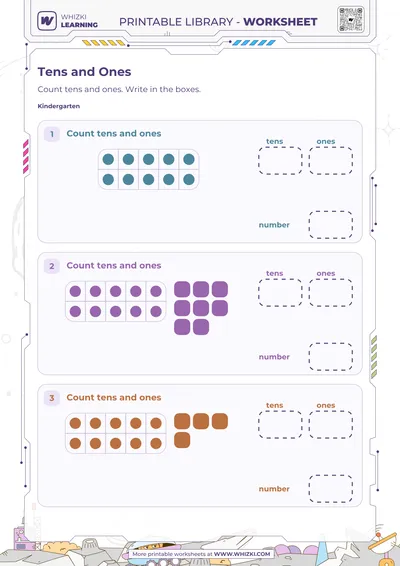
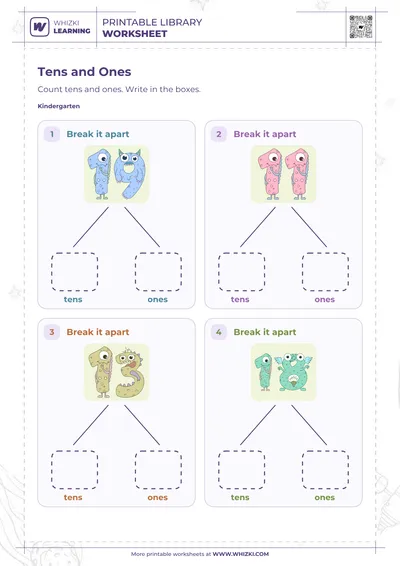
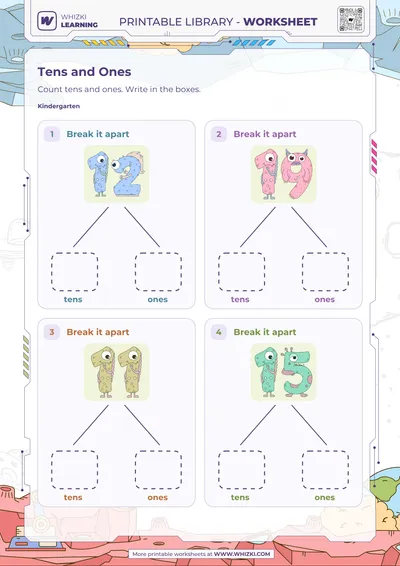
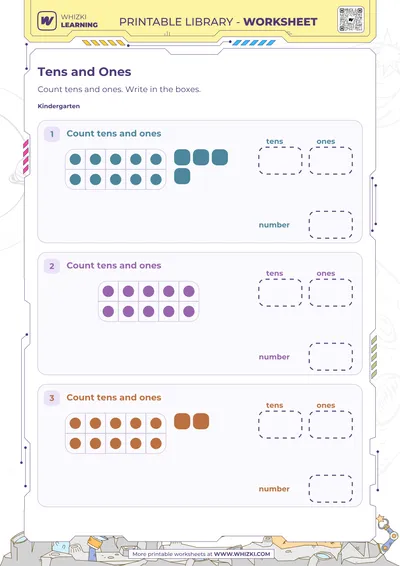
Numbers 10, 11, and 15 → Tens and ones counting → Writes how many tens and ones each number shows.
Place value models → Part-to-whole matching → Connects one ten and extra ones to the matching teen number.
Writing fields → Number recording → Practices writing the tens count and ones count in the correct spaces.

Kids often know how to count forward, but tens and ones can still feel slippery. This one-page printable keeps the task small and clear. It uses the numbers 10, 11, and 15, with learning models and writing fields so a first grader can build each number, count the tens, count the ones, and record both parts.
This page is a good fit when a child can count to 15 and is beginning to notice that teen numbers are made from one ten plus some extra ones. Sit together with a pencil and go one row at a time. If 10 feels tricky, pause there first and say, “One ten and zero ones,” before moving on to 11 and 15.
The practice works by connecting the whole number to its place value parts. For 10, the child sees that there is 1 ten and 0 ones. For 11, there is 1 ten and 1 one. For 15, there is 1 ten and 5 ones. If your child needs more practice after this page, the tens and ones number cards give another hands-on way to look at numbers by place value.
Keep the talk simple while they work. Ask, “How many tens?” and “How many ones?” then let them write the answers in the fields. If they mix up the two columns, cover one part with your finger and count together. A helpful next step is to connect the written number to its word form with the number words to numerals worksheet, since it gives extra practice reading number names and matching them to numerals.
Boost your child’s skills with our discounted workbooks. Engaging activities for preschool, kindergarten, and grade 1 - now at special sale prices!


Fast shipping
Secure Payment
Licensed Teachers
For the planet
Printed in the USA
Helpful guides for parents and teachers, and tips for making learning at home super fun.

Picture labels can build meaning, first-sound attention, or guessing habits. Use this parent-friendly decision tree to know when to cover or reveal the picture.

A vague school screening notice can leave families guessing, so start with seven plain questions about the test, timing, language, evidence, and next steps.

A field note on the May 2026 move to one shared worksheet generator API, with a simple parent preview for print consistency and handwriting comfort.

A seven-minute apple observation helps children compare color, stem, skin, weight, smell, and a cut surface, then draw what children noticed before any craft begins.
Get exclusive activities, expert tips, and inspiration for a more meaningful, offline family life.