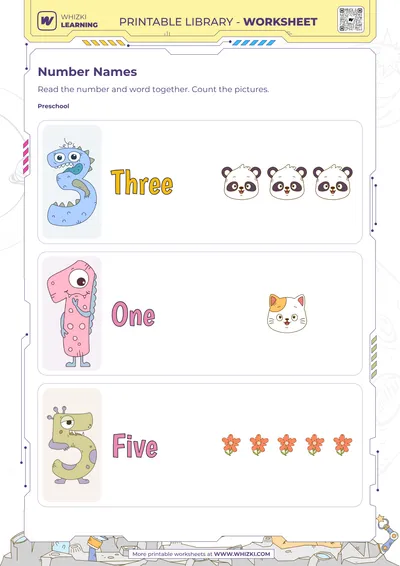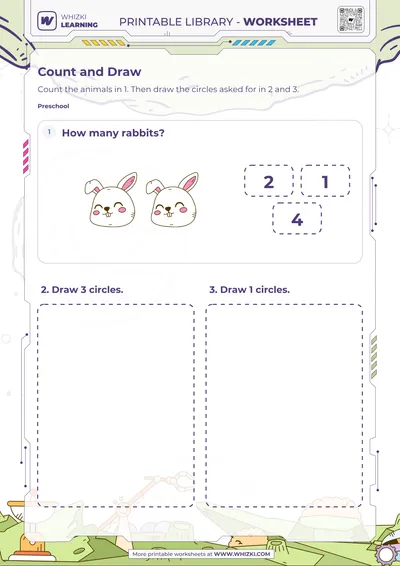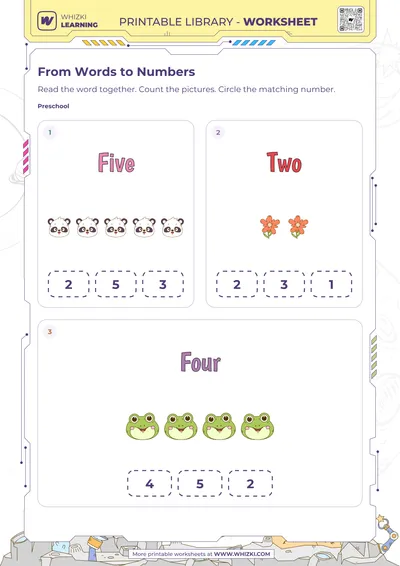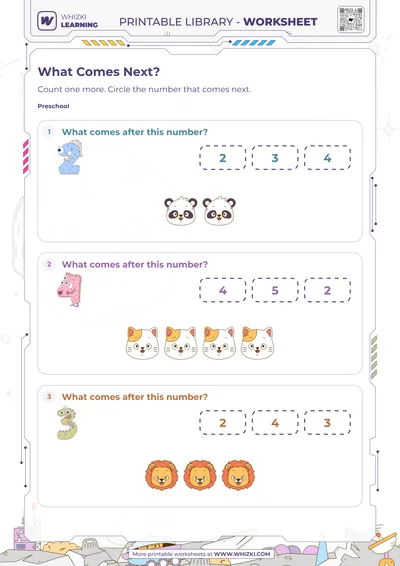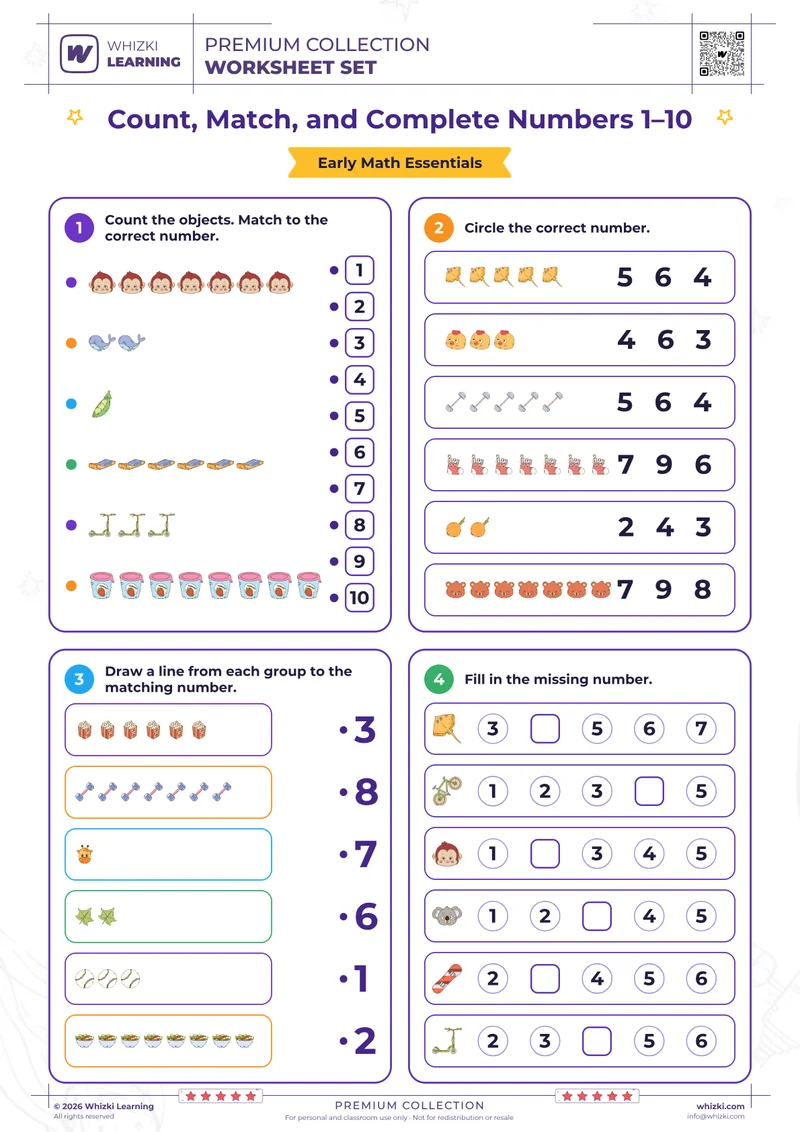


Count each picture once and connect the final spoken number with the numeral representing the whole group.
Compare a counted quantity with printed answer choices and match groups to their corresponding numerals.
Complete short sequences that increase by one, using the numbers on both sides of each blank to check the missing value.

This counting and number matching worksheet brings four activities onto one page. The first panel has 6 picture groups to connect to a number ladder from 1 to 10. The next panel offers 6 counting questions with three answer choices each. Another 6 groups need matching lines, followed by 6 short number sequences with one missing value apiece.
Start with the first group, which contains 7 pictures. Touch each picture once while counting aloud, then find the numeral that names the total. Encourage the child to say the total again after the last picture. In the multiple-choice panel, count before circling an answer; a nearby numeral may be only one more or one less than the quantity shown.
For the matching section, compare quantities rather than the kind or size of the pictures. Trace a possible connector with a finger before drawing it, leaving space to follow other lines. In the final panel, read the visible numbers in order and count forward by one to fill each blank. Read the completed sequence again to check that no number was skipped or repeated.
Use the number reference library when the child wants another look at a numeral. Related counting and arithmetic pages are available in the Addition and Subtraction Pack. Begin with one panel during a short practice session, then return to the others when the child is ready. Counters on separate paper can help connect a printed group with a quantity the child can move.
Boost your child’s skills with our discounted workbooks. Engaging activities for preschool, kindergarten, and grade 1 - now at special sale prices!


Fast shipping
Secure Payment
Licensed Teachers
For the planet
Printed in the USA
Helpful guides for parents and teachers, and tips for making learning at home super fun.

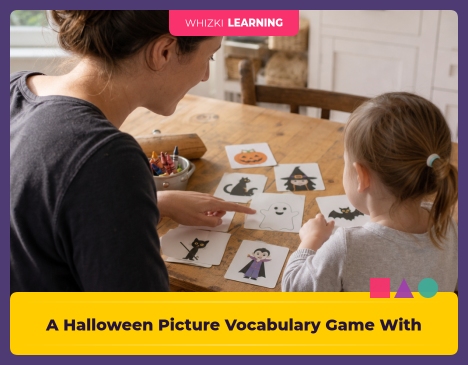
Use six friendly Halloween pictures for naming, first-sound sorting, describing, and a tiny story, with a nonreading option for ages 3-7.

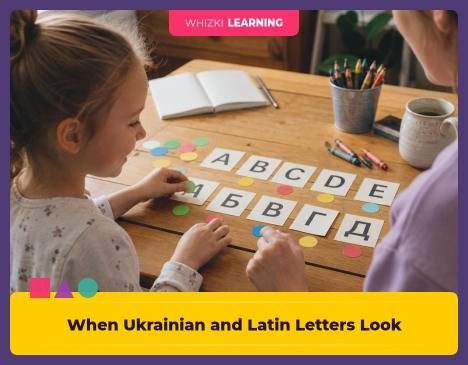
A warm, practical plan for helping ages 3-7 notice Ukrainian and Latin letter look-alikes with color cues, context, and short table routines.

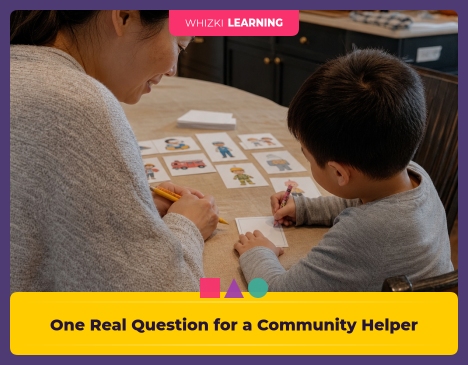
Help children ages 3 to 7 prepare one respectful question for a real community helper using a simple card, quick rehearsal, and honest context.

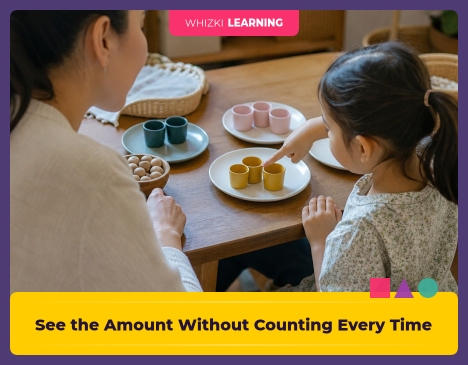
Use cups, plates, or blocks to help children ages 3-7 recognize small amounts without counting each object, in a quick table routine.
Get exclusive activities, expert tips, and inspiration for a more meaningful, offline family life.