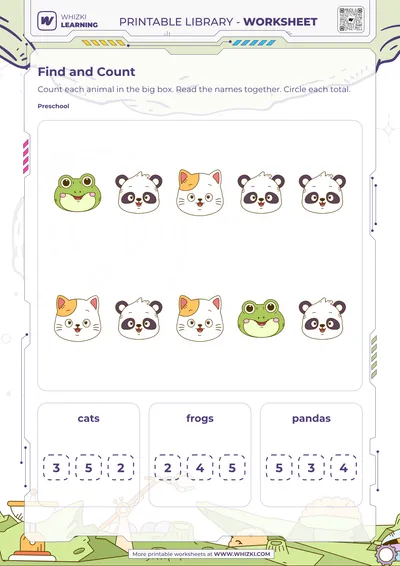


Child → Counts each animal kind one at a time → Finds totals up to 10 without double-counting items.
Child → Matches a counted group to a written number → Circles the total that represents the set.
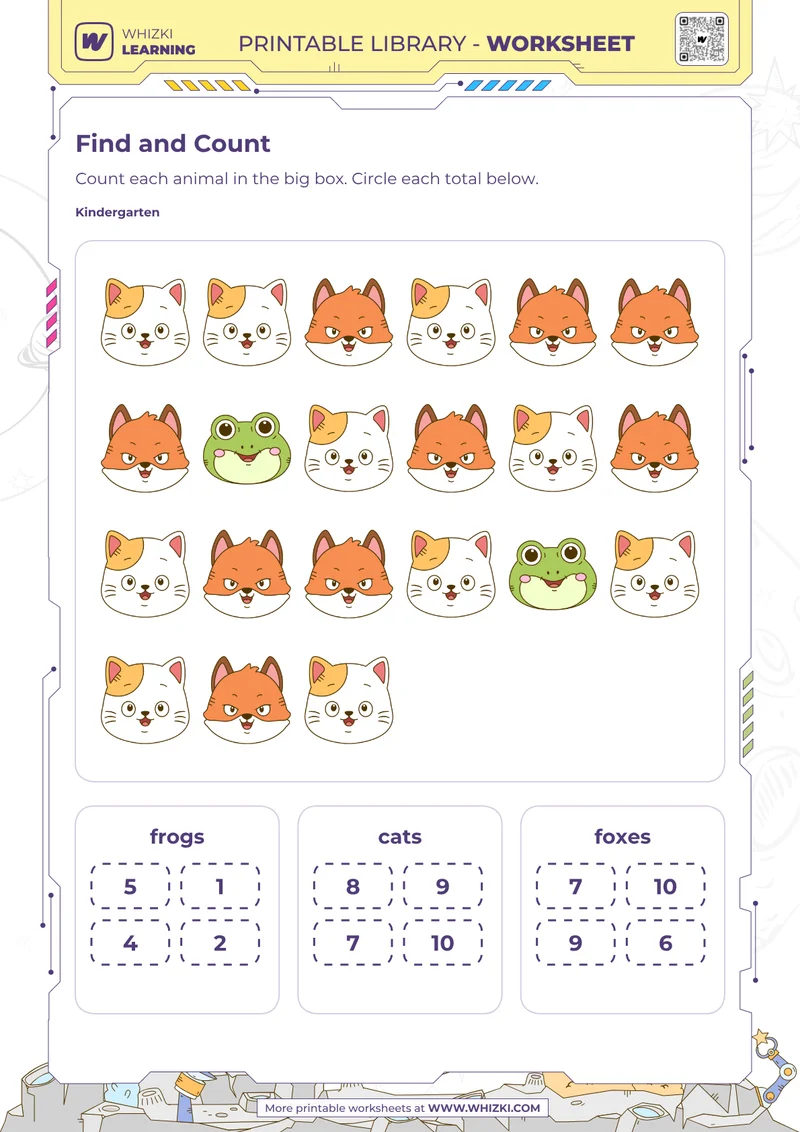
Child → Scans a mixed picture field by animal kind → Sorts visual information before counting each group.

Kids often know the counting words before they can keep track of a busy picture. On this worksheet, they look through one mixed animal picture field, find each kind of animal, count how many there are, and circle the matching total. Each kind has no more than 10, so the work stays right in a kindergarten counting range.
This page is a good fit when a child can count small groups out loud but still needs practice slowing down. The main skill is one-to-one counting, touching or pointing to each animal once while saying one number word. Circling the total also gives quick practice connecting a counted set to a written number.
Sit beside your child and let them choose one animal kind to count first. If they skip around, try covering part of the page with a blank sheet of paper or using a finger as a tracker. You can say, “Start at the top and move across,” then let them do the counting. If the answer seems off, ask them to count that animal kind again instead of giving the number right away.
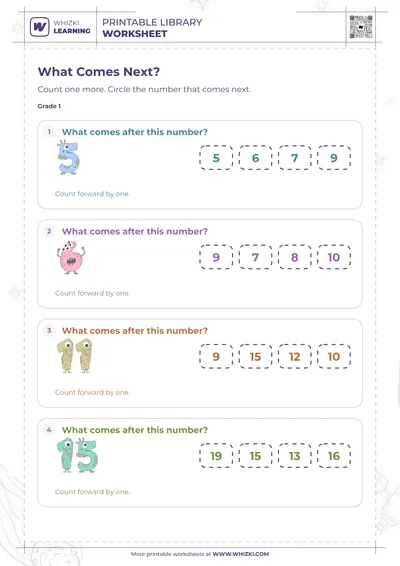
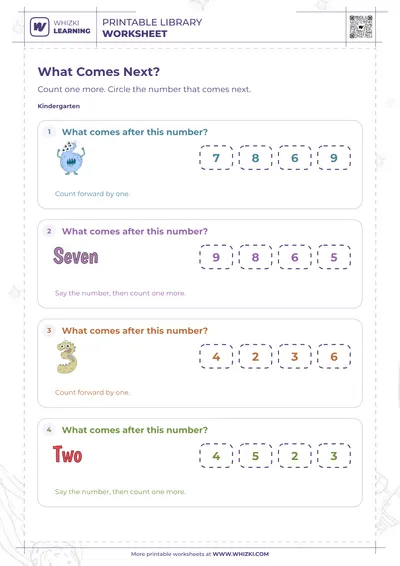
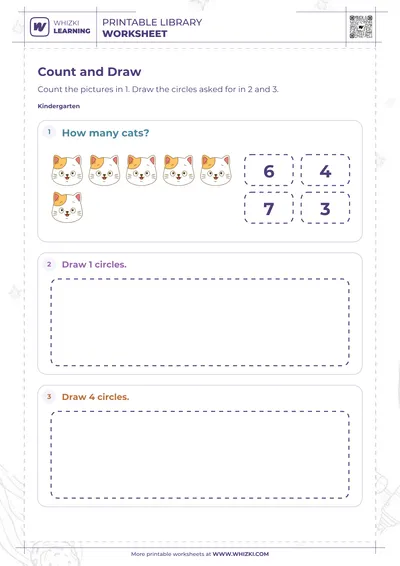
For a next step, keep the number sense going with missing number practice, which helps children notice number order after counting sets. If they enjoy following a path, number trails practice gives another screen-free way to work on counting sequence and missing numbers.
Boost your child’s skills with our discounted workbooks. Engaging activities for preschool, kindergarten, and grade 1 - now at special sale prices!


Fast shipping
Secure Payment
Licensed Teachers
For the planet
Printed in the USA
Helpful guides for parents and teachers, and tips for making learning at home super fun.

Use one familiar snack to build science talk and vocabulary without pressure to taste. This kitchen-table investigation honors allergies, texture needs, and child choice.

Help young children measure with paper clips before a ruler, using equal units, clear endpoints, and quick fixes for gaps, overlaps, and different answers.

Picture labels can build meaning, first-sound attention, or guessing habits. Use this parent-friendly decision tree to know when to cover or reveal the picture.

A vague school screening notice can leave families guessing, so start with seven plain questions about the test, timing, language, evidence, and next steps.
Get exclusive activities, expert tips, and inspiration for a more meaningful, offline family life.