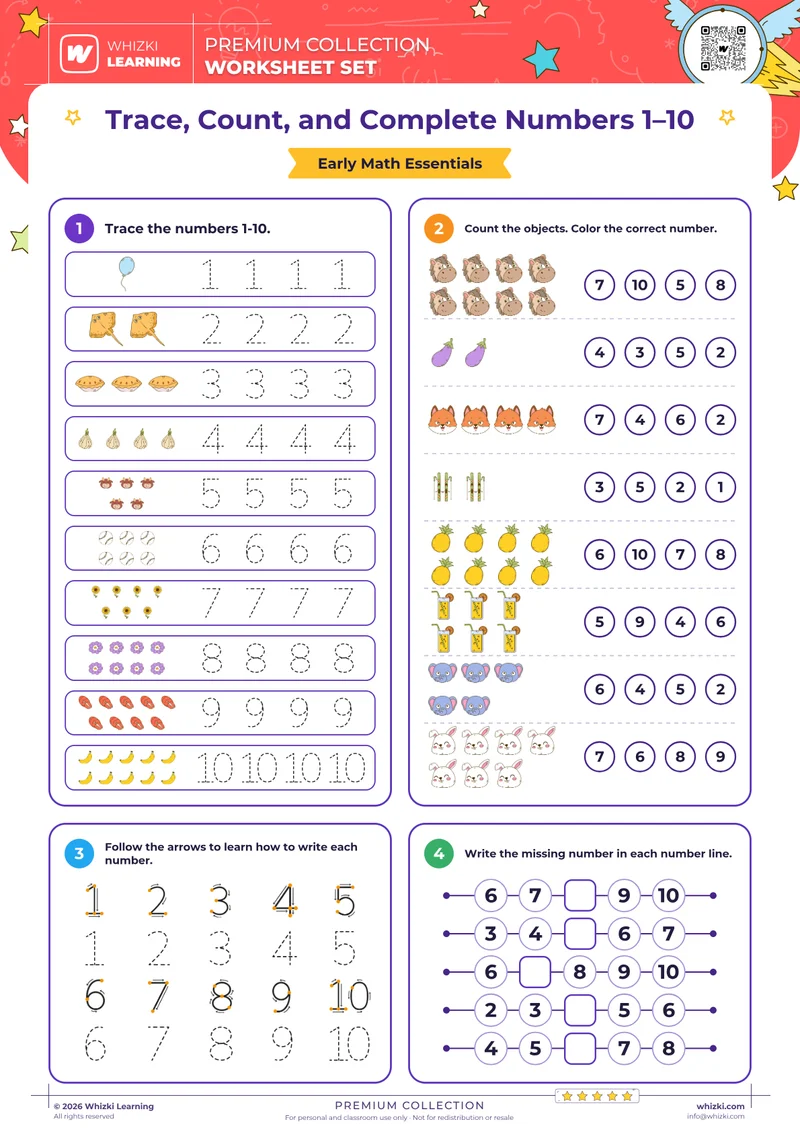


Follow printed number models to practice forming 1–10, attending to starting position, direction, and the two digits in 10.
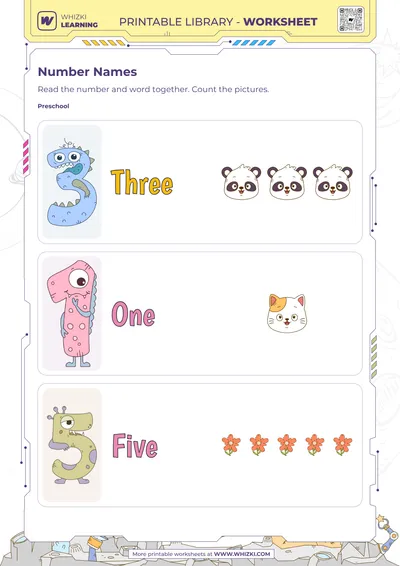
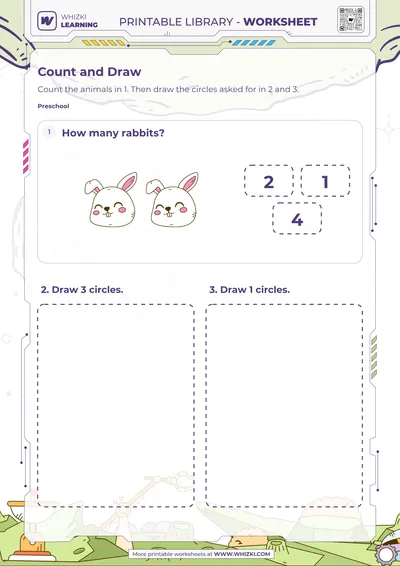
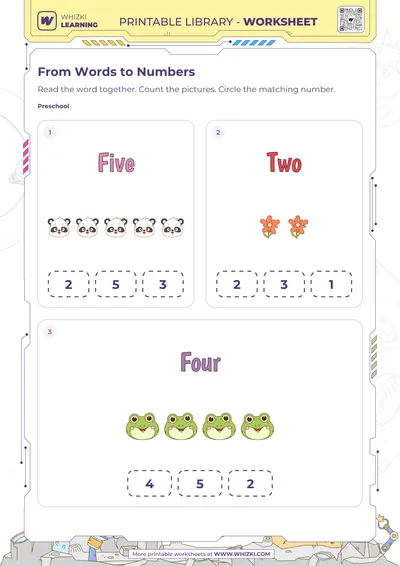
Count a picture group and select the numeral that represents its quantity from the printed choices.
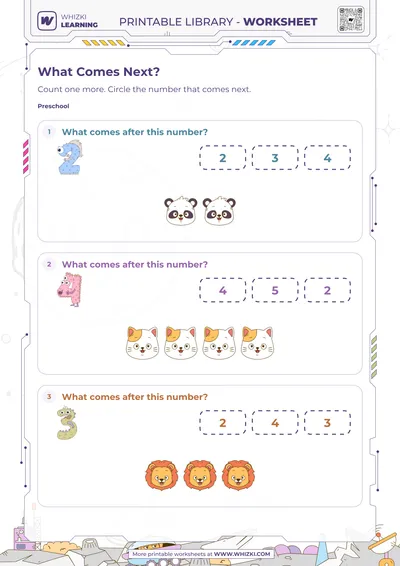
Use the order of consecutive numbers to complete short sequences and check each missing value by counting aloud.

This number tracing worksheet for 1–10 combines handwriting practice with counting and number order. Ten tracing rows pair each written number with a picture group of that size. A separate panel has 8 count-and-color questions, followed by writing models with arrows and 5 number sequences to complete. Children can move between recognizing a numeral, forming it, and checking the quantity it represents.
Begin with one tracing row and count its pictures together. Look at the numeral’s starting point and direction before following the dotted model with a pencil. The number 10 uses two digits, 1 and 0, written next to each other. Let the child pause between attempts and compare a traced number with the printed model instead of rushing to finish the entire column.
In the count-and-color panel, the first group contains 8 pictures. Count each picture once, then color the matching number among the choices. Use the arrow models for another look at number formation when needed. For a number sequence, count forward by one through the visible values, write the missing number, and read the completed sequence aloud to check the order.
The number reference library offers another way to revisit individual numerals, while Early Math Essentials includes related counting activities. Start with a few tracing rows and one counting question if the full page is too much for a single sitting. A follow-up with movable counters can connect the child’s written numeral to a group they have counted themselves.
Boost your child’s skills with our discounted workbooks. Engaging activities for preschool, kindergarten, and grade 1 - now at special sale prices!


Fast shipping
Secure Payment
Licensed Teachers
For the planet
Printed in the USA
Helpful guides for parents and teachers, and tips for making learning at home super fun.

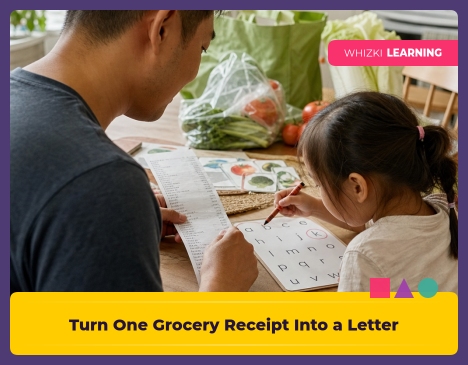
Use a grocery receipt for a short, screen-free letter hunt that compares uppercase and lowercase, spots repeated words, and stops before print feels tiring.

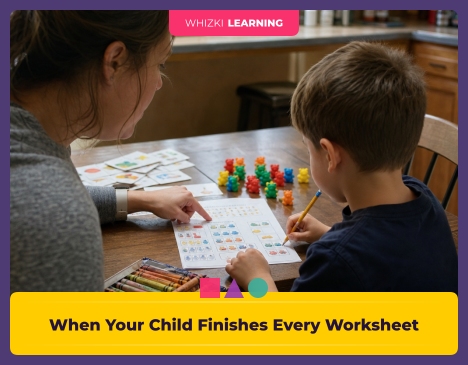
A practical decision tree for checking fast worksheet work, changing the response style, and deciding whether a harder page actually helps ages 3 to 7.

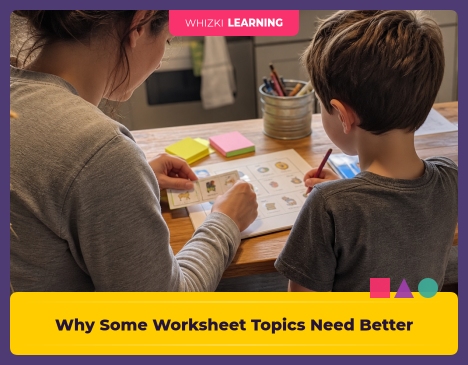
A field note on May audit gaps in early learning worksheets, with a simple home check for spotting when clearer artwork matters more than extra directions.

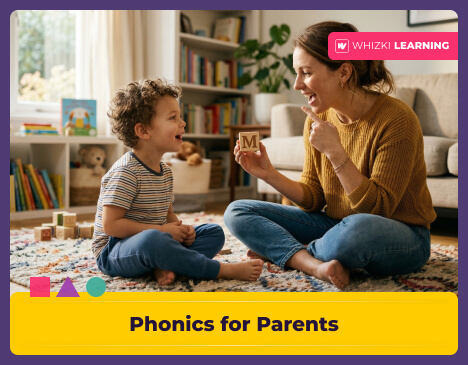
Teaching a child to read often creates immense anxiety for parents, leading to frustrating flashcard memorization. This comprehensive guide details a proven, Montessori-inspired phonics method that prioritizes letter sounds over letter names. Learn how screen-free, hands-on learning activities build essential phonemic awareness and prepare preschoolers for fluent reading without academic pressure.
Get exclusive activities, expert tips, and inspiration for a more meaningful, offline family life.