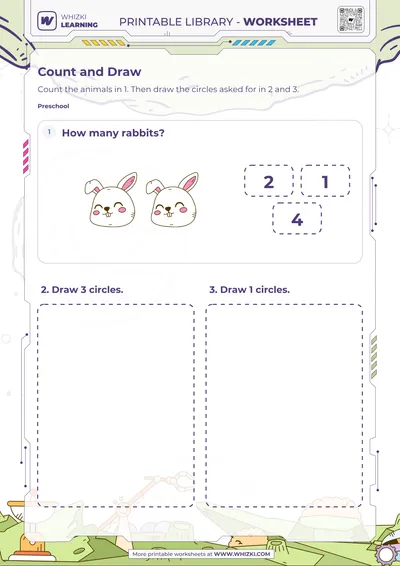
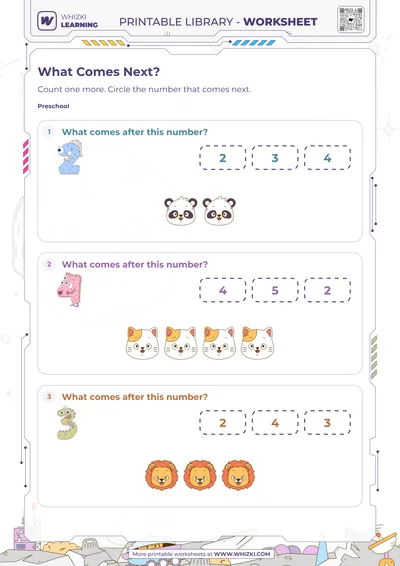
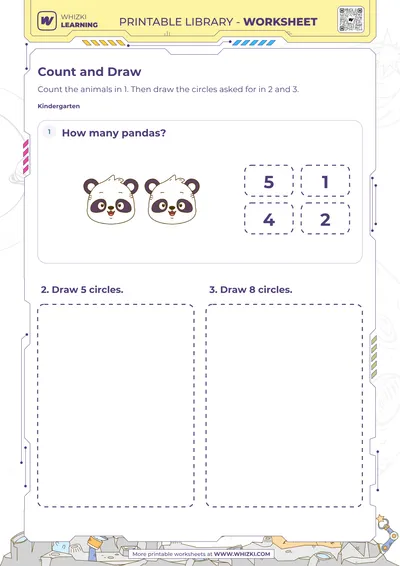
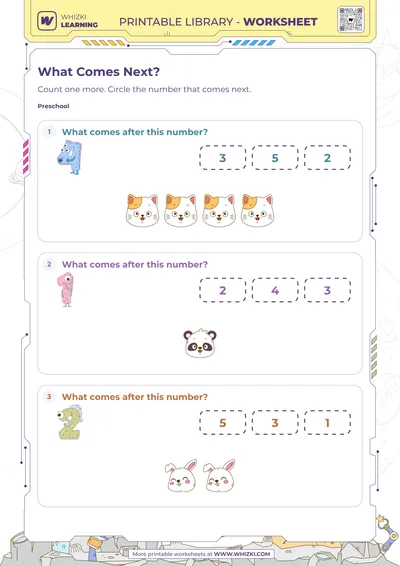
Numbers to five → Counting order → Names the number that comes right after a shown number within five.
Preschool learner → Next-number choice → Uses counting aloud or fingers to choose the next whole number.
Adult and child → Math talk → Checks answers by counting forward one step from the starting number.

Kids often know the counting words, then stall when the page asks, “What comes next?” This preschool math worksheet keeps the task small and clear. Children look at a number, count forward, and choose the next whole number, with answers no higher than five.
This page is a good fit for a 4-year-old who can count aloud to five, even with a little help. If written numerals still feel new, sit side by side and point as you count. For extra number-choice practice with pictures first, try the animal counting number choice worksheet, because counting objects can make the numeral choice feel more concrete.
The practice here is about number order. Each prompt asks your child to hold one number in mind and move one step forward. Saying the count aloud, tapping fingers, or lining up a few small toys can help them see why 3 comes after 2 and 5 comes after 4. Keep the pace light. A short, calm round is plenty.
Stay close and read any directions as needed, but let your child do the choosing. If they guess, go back to the starting number and count forward together one time. When the next-number idea feels steady, the number words two three one worksheet is a gentle next step, because it connects small numbers with their written words.
Boost your child’s skills with our discounted workbooks. Engaging activities for preschool, kindergarten, and grade 1 - now at special sale prices!


Fast shipping
Secure Payment
Licensed Teachers
For the planet
Printed in the USA
Helpful guides for parents and teachers, and tips for making learning at home super fun.

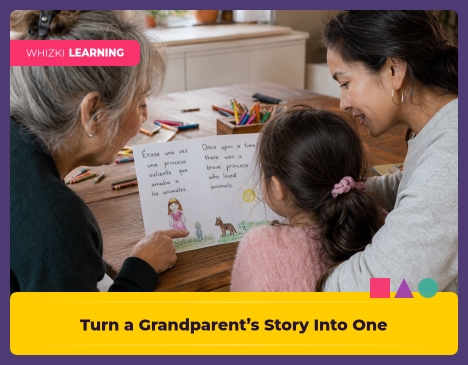
A simple plan for turning one grandparent memory into a bilingual keepsake page with exact words, a child drawing, and clear privacy boundaries.

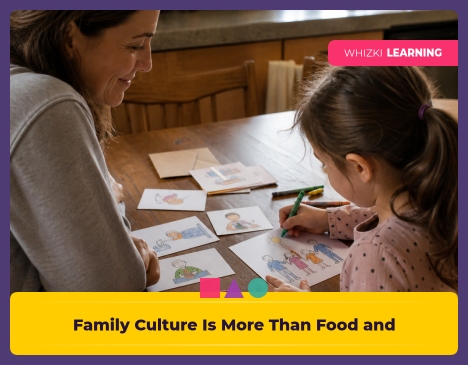
A practical guide for inviting family stories about names, language, music, routines, celebrations, and places without putting children on display.

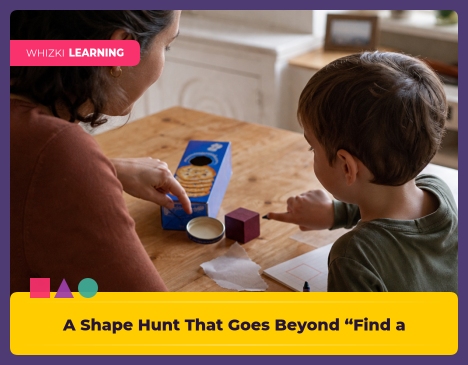
Turn a quick room search into early geometry talk by asking about sides, corners, curves, and shapes inside everyday objects.

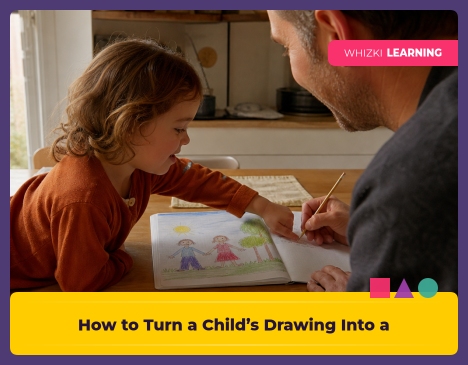
Use a child’s own drawing and spoken words to build a first sentence through adult dictation, shared writing, or optional child writing.
Get exclusive activities, expert tips, and inspiration for a more meaningful, offline family life.