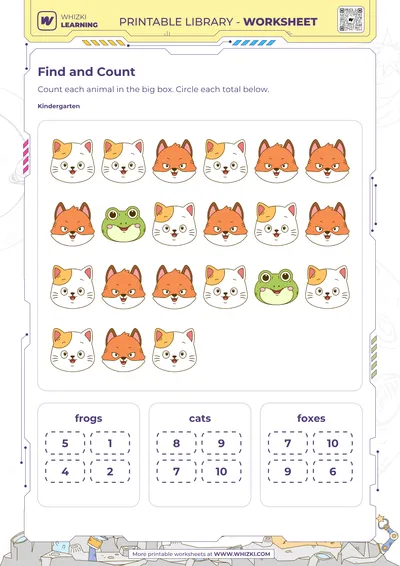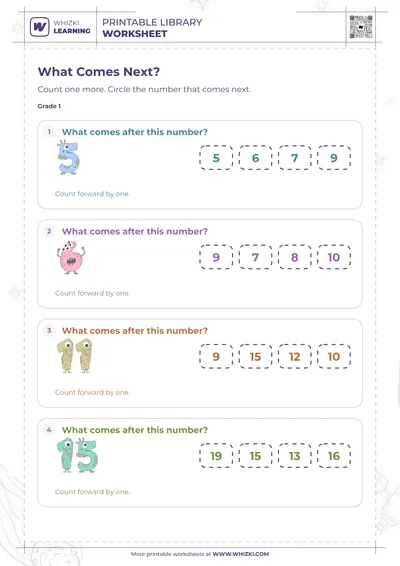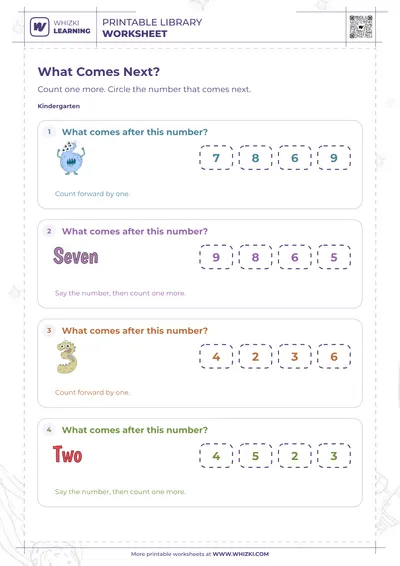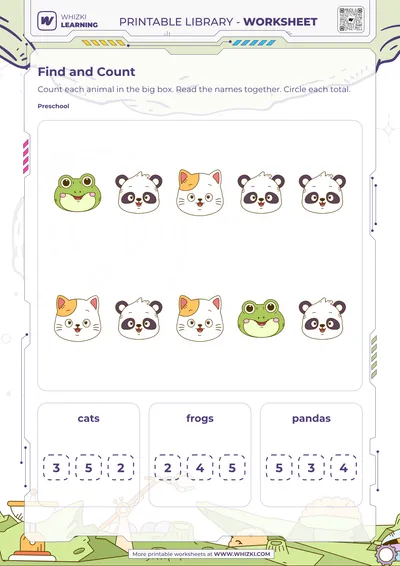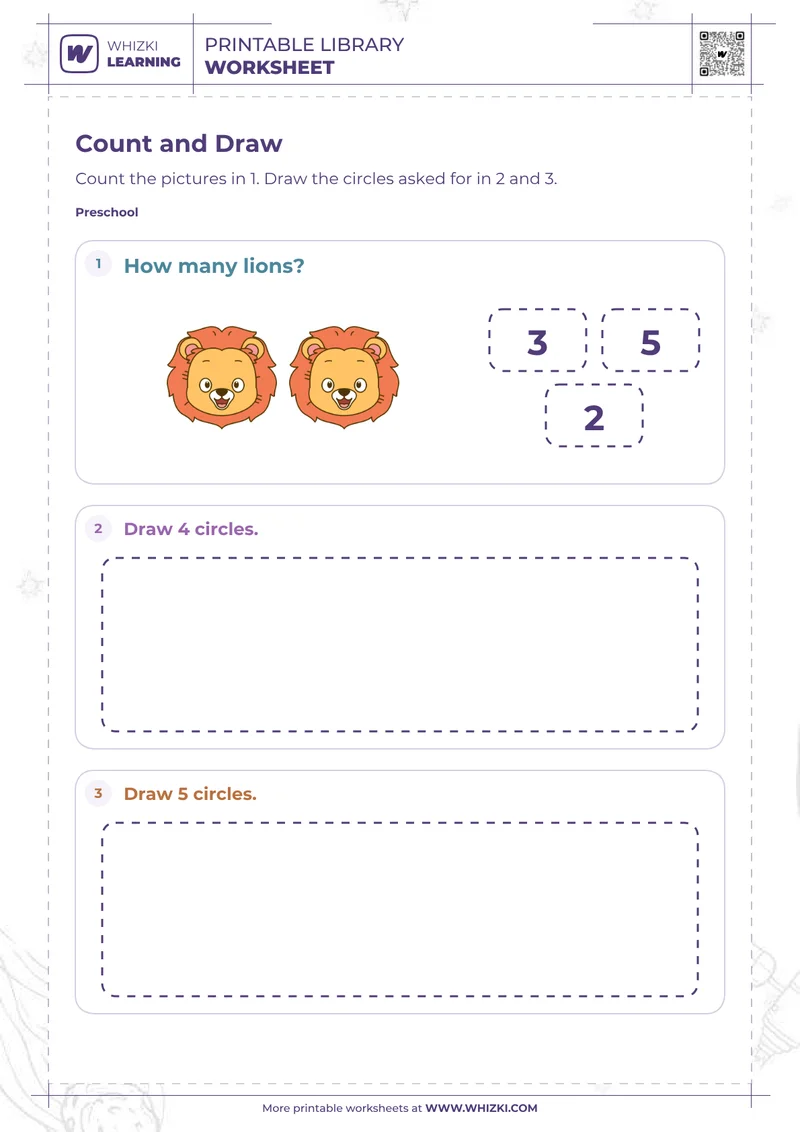


Preschooler → Counts a printed circle group by touching each circle once → Finds the total without skipping objects.
Preschooler → Draws two requested circle groups up to 10 → Matches a numeral or spoken number to a set.
Preschooler → Recounts drawn circles after finishing each group → Checks whether the group has too many or too few.

Counting can get wobbly at this age. Kids may say the numbers quickly, skip a circle, or keep counting after the group is done. This page keeps the task simple: count one group of circles, then draw two requested groups of circles. Each drawing stays within 10 circles, so the work feels small enough for a preschooler to try.
This is a good fit when a child can point, make simple circle marks, and join you for a short paper activity. The goal is count and draw practice, not perfect circles. If the number feels too big today, cover part of the page and do one group at a time. For extra practice with small quantities, try the Numbers Two, Five, and Three Worksheet because it gives a narrower number focus before coming back to larger groups.
The practice works because the child has to connect a number to a set. First, count the printed circles by touching each one once. Then draw the requested circles one at a time and stop when the group matches the number. That builds one-to-one counting, careful stopping, and checking the total by recounting.
Sit close and read the prompt aloud. Let the child point while you count together, then hand over the pencil or crayon for the drawing part. If there are too many or too few circles, keep it light: “Let’s count and check.” When this page feels comfortable, the Next Whole Number Preschool Worksheet is a useful next step because it keeps number order in view after counting sets.
Boost your child’s skills with our discounted workbooks. Engaging activities for preschool, kindergarten, and grade 1 - now at special sale prices!


Fast shipping
Secure Payment
Licensed Teachers
For the planet
Printed in the USA
Helpful guides for parents and teachers, and tips for making learning at home super fun.

Use one familiar snack to build science talk and vocabulary without pressure to taste. This kitchen-table investigation honors allergies, texture needs, and child choice.

Help young children measure with paper clips before a ruler, using equal units, clear endpoints, and quick fixes for gaps, overlaps, and different answers.

Picture labels can build meaning, first-sound attention, or guessing habits. Use this parent-friendly decision tree to know when to cover or reveal the picture.

A vague school screening notice can leave families guessing, so start with seven plain questions about the test, timing, language, evidence, and next steps.
Get exclusive activities, expert tips, and inspiration for a more meaningful, offline family life.