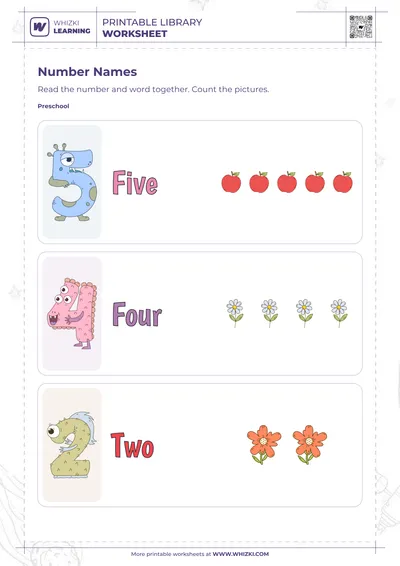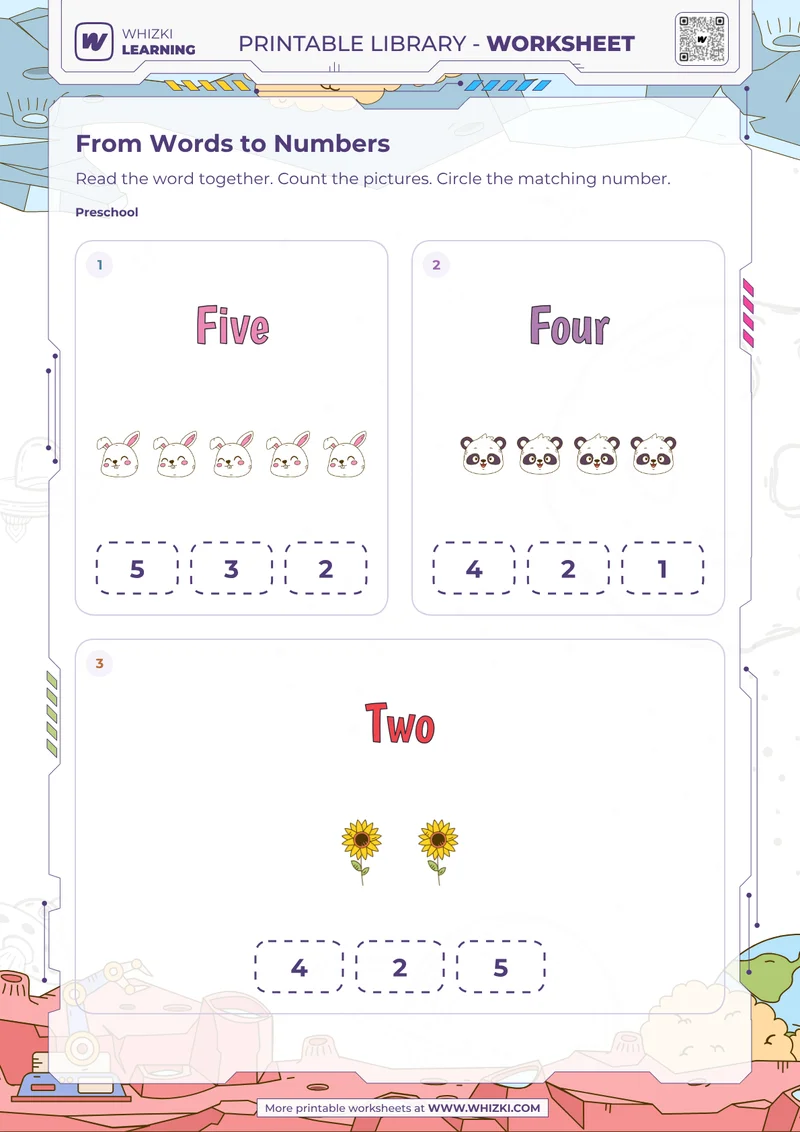


Number words five, four, and two → Read and connect each word to a numeral → Builds accurate word-to-numeral matching.
Picture cues → Count or check the shown amount before choosing → Supports careful selection from three numeral choices.
Three choices → Compare possible numerals instead of writing from memory → Gives preschoolers practice recognizing 5, 4, and 2.

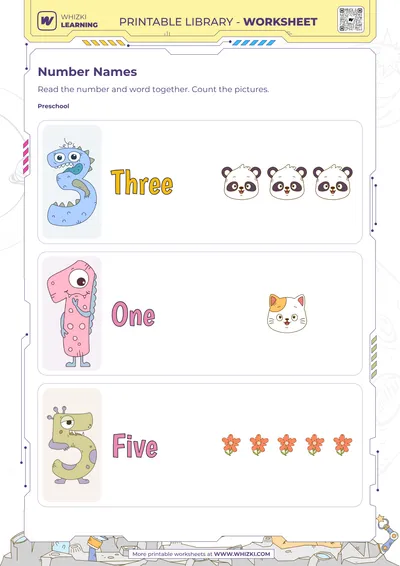
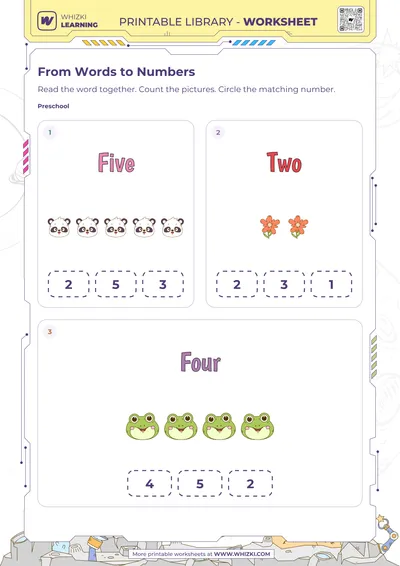
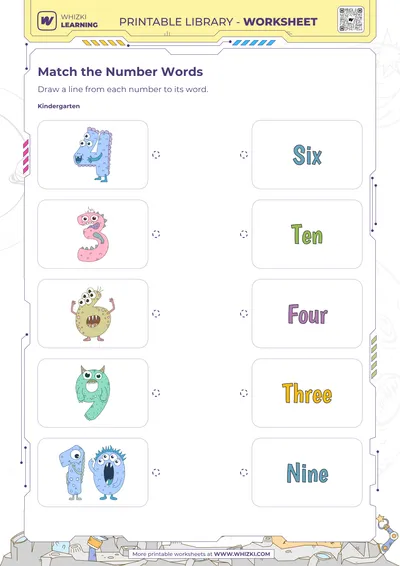
Kids may count out loud with confidence and still stall when number words show up on paper. This preschool math page keeps the job small: read the number words five, four, and two, look at the picture cue, then choose the matching numeral from three choices.
It is a good fit when a five-year-old is beginning to see that a spoken number, a written number word, and a numeral can name the same amount. The page is a selected set from one to five, not a full one-to-five chart, so the focus stays on 5, 4, and 2.
Sit close and have your child point to the word first, say it, check the picture cue, and then choose the numeral that matches. If the three choices feel busy, cover two choices with your hand, compare one at a time, and then uncover the set again for the final pick.
For a next step, keep the numbers familiar but change the thinking a little. The number cards for five, three, and four give another small set to name and compare, while the next number to five worksheet helps practice what comes after a number within the same early range.
Boost your child’s skills with our discounted workbooks. Engaging activities for preschool, kindergarten, and grade 1 - now at special sale prices!


Fast shipping
Secure Payment
Licensed Teachers
For the planet
Printed in the USA
Helpful guides for parents and teachers, and tips for making learning at home super fun.

Use one Halloween worksheet in a calm 15-minute flow: preview, try, talk with objects, then stop and store, with age adjustments for preschool and kindergarten.

A simple plan for turning one grandparent memory into a bilingual keepsake page with exact words, a child drawing, and clear privacy boundaries.

A practical guide for inviting family stories about names, language, music, routines, celebrations, and places without putting children on display.

Turn a quick room search into early geometry talk by asking about sides, corners, curves, and shapes inside everyday objects.
Get exclusive activities, expert tips, and inspiration for a more meaningful, offline family life.