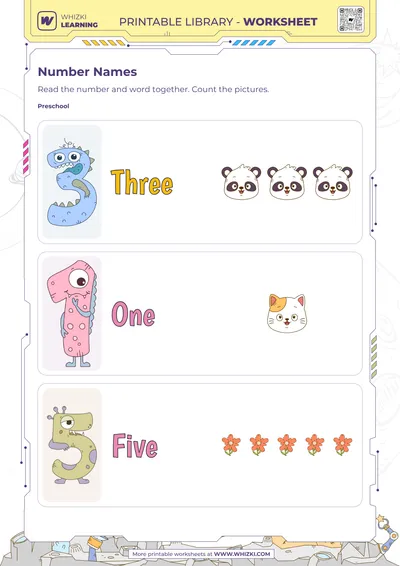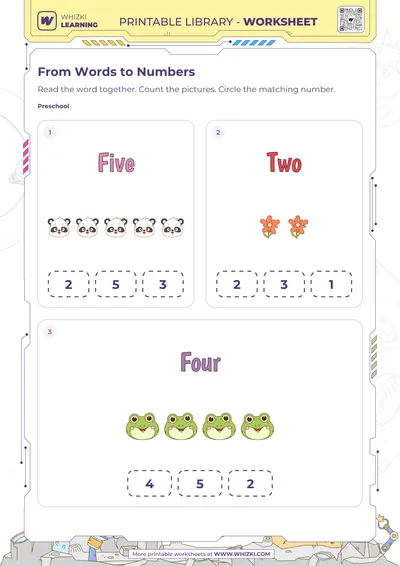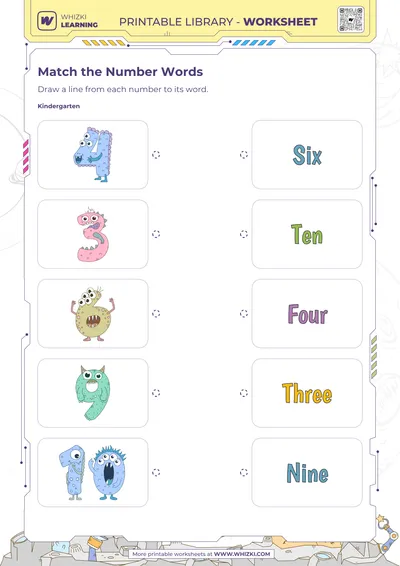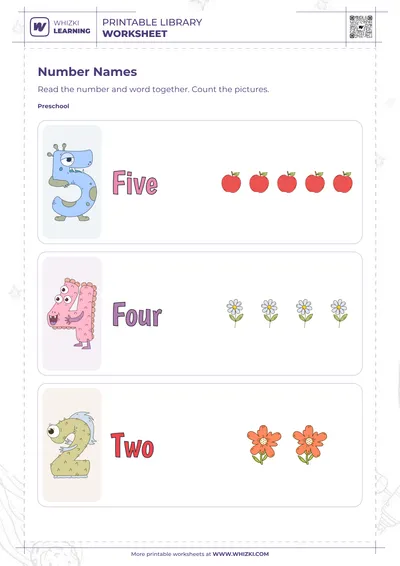


Numbers two, four, and one → Matching numerals to words → Child connects spoken counting with printed number language.
Number words two, four, and one → Visual recognition → Child notices that written words can name familiar small quantities.
Line matching task → Fine motor control → Child practices careful pencil movement while checking each number-word pair.

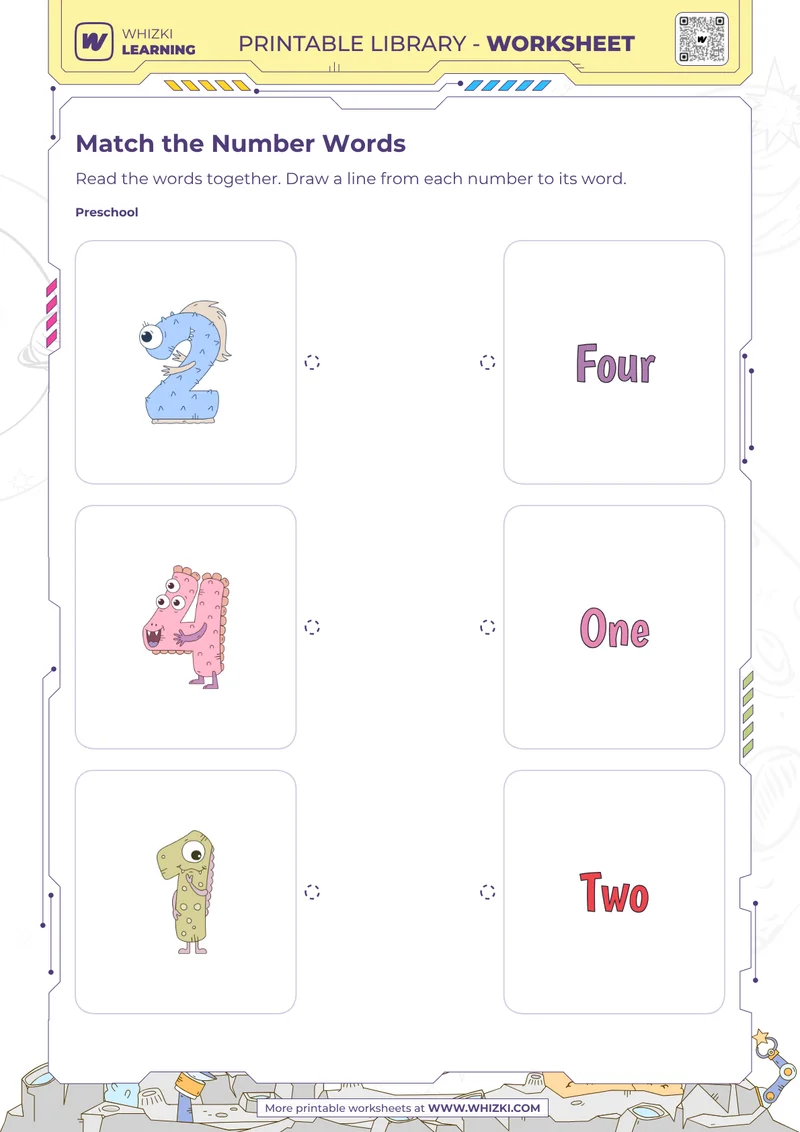
This preschool math worksheet asks children to draw lines from the numerals 2, 4, and 1 to the number words two, four, and one. The page practices number word matching and early counting language, using a small selected set instead of a full one to five chart.
At age three, children often count out loud before printed numbers feel familiar. Kids may stall when a numeral looks easy but the written word looks long, so a short matching task keeps the practice small and doable.
Sit beside the child with a crayon or pencil, point to the numeral 2, and say the word two. Ask the child to find the word two and draw one line between the pair, then repeat with 4 and 1.
The worksheet is useful because the page focuses only on three number pairs, so the child can look carefully without a crowded page. The draw-a-line format gives quick feedback, supports pencil control, and works well for a calm, screen-free math moment.
Boost your child’s skills with our discounted workbooks. Engaging activities for preschool, kindergarten, and grade 1 - now at special sale prices!


Fast shipping
Secure Payment
Licensed Teachers
For the planet
Printed in the USA
Helpful guides for parents and teachers, and tips for making learning at home super fun.

Picture labels can build meaning, first-sound attention, or guessing habits. Use this parent-friendly decision tree to know when to cover or reveal the picture.

A vague school screening notice can leave families guessing, so start with seven plain questions about the test, timing, language, evidence, and next steps.

A field note on the May 2026 move to one shared worksheet generator API, with a simple parent preview for print consistency and handwriting comfort.

A seven-minute apple observation helps children compare color, stem, skin, weight, smell, and a cut surface, then draw what children noticed before any craft begins.
Get exclusive activities, expert tips, and inspiration for a more meaningful, offline family life.