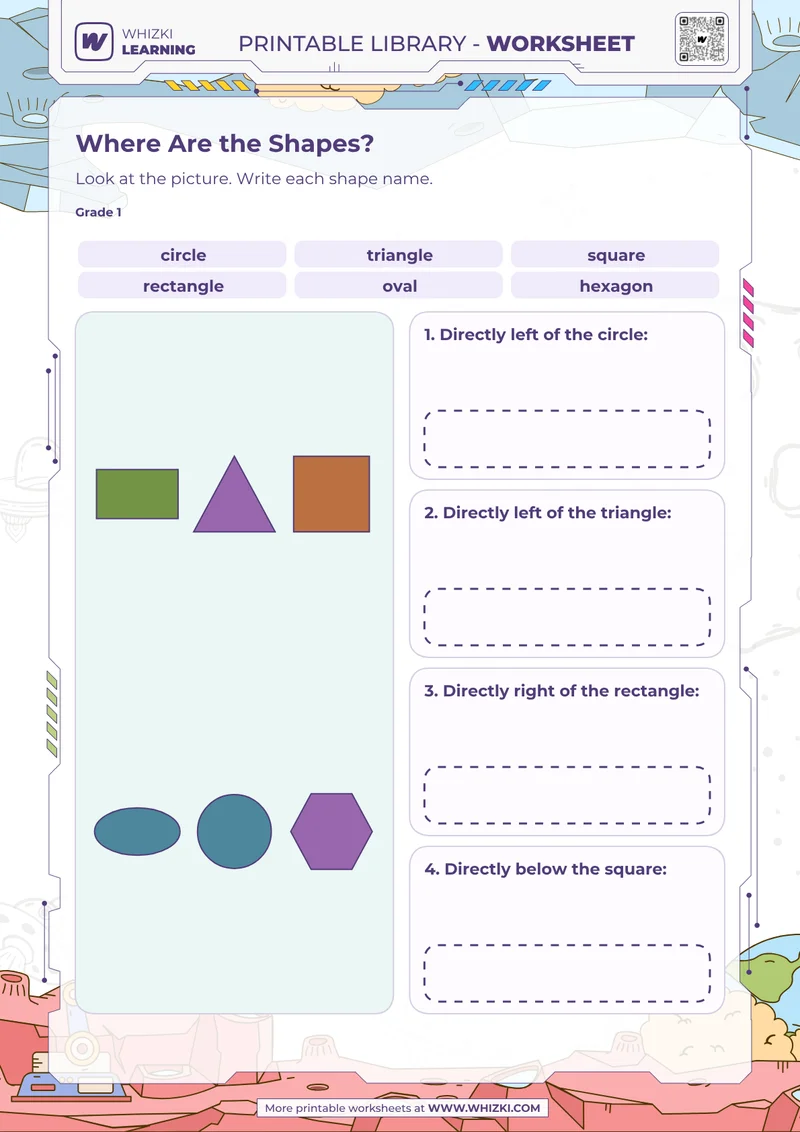
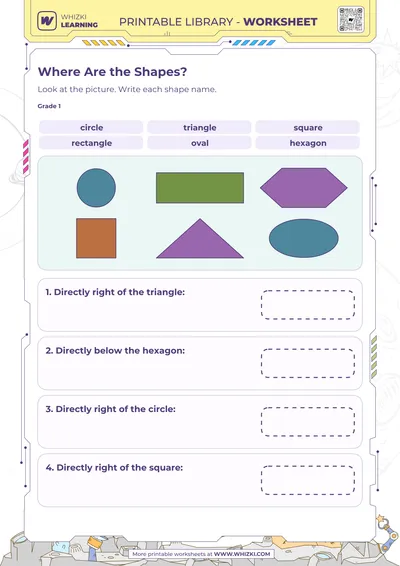
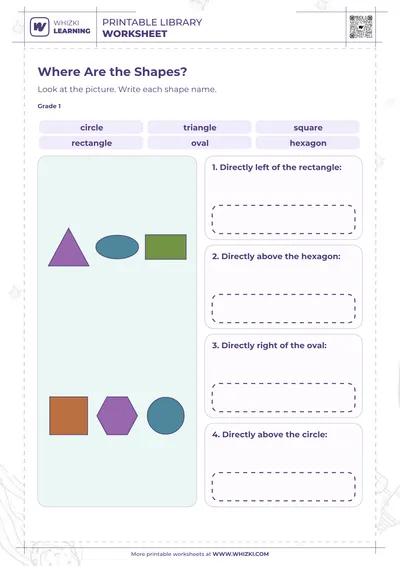
Position words help a child describe where one object is in relation to another. This shape position worksheet uses a shared board containing rectangle, triangle, square, oval, circle, hexagon. Four questions ask for the shape directly above, below, to the left, or to the right of a named reference shape. Read the prompts together and use the shape-name bank to help write each answer.
Begin with the first prompt: find the shape directly left of the circle. Point to the circle first, then move one position to the left. The answer is oval. Keep the worksheet facing the same way while checking the relationship. Starting from the named reference shape is the key step; looking from another shape can lead to a different answer.
The next question uses the triangle as its reference and asks for the shape left of it. Find that starting point again before moving to the neighboring position. Directly above or below means staying in the same column, while directly left or right means staying in the same row. A diagonal neighbor does not meet those rules. Let your child point to an answer before writing its name, using the word bank for spelling support.
Visit the guide to describing relative positions for context and everyday examples. The Shapes and Geometry set offers related practice. Complete a few questions and review the reference point for an uncertain answer. For a hands-on follow-up, arrange paper shapes in two rows and give one position clue at a time. Ask your child to explain both the starting shape and the neighboring shape.