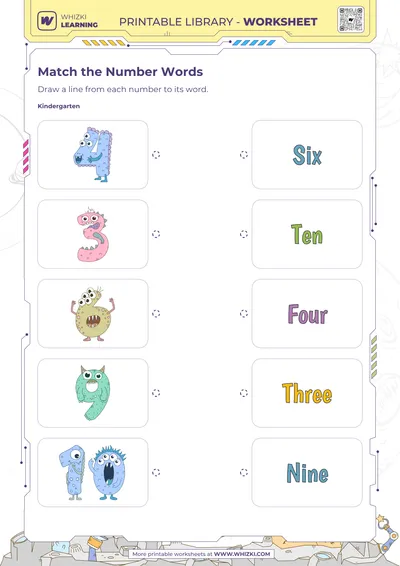


Number words four, eight, six, one, and seven → Read each word → Write the matching numeral in the large box.
Single digit numerals → Recall shapes for 4, 8, 6, 1, and 7 → Connect printed words with math symbols.
Large answer boxes → Form the matching numeral by hand → Make each response visible for quick checking together.

Kids often recognize numbers in one format before they recognize them in another. On this kindergarten math page, they read the number words four, eight, six, one, and seven, then write the matching numerals 4, 8, 6, 1, and 7 in large boxes. It is a small set on purpose, not a full 1 to 10 chart, so the practice stays doable.
This is a good fit when a child can count some objects or say counting words, but still needs help connecting printed number words to numerals. Sit nearby and read the first word together if needed. Then ask, “What number does that word say?” and let them write the numeral. If the numeral shape is tricky, have them say the number, point to it if you provide a small reference, and try again in the box.
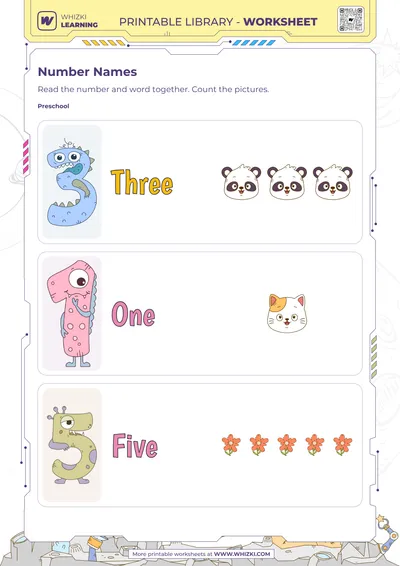
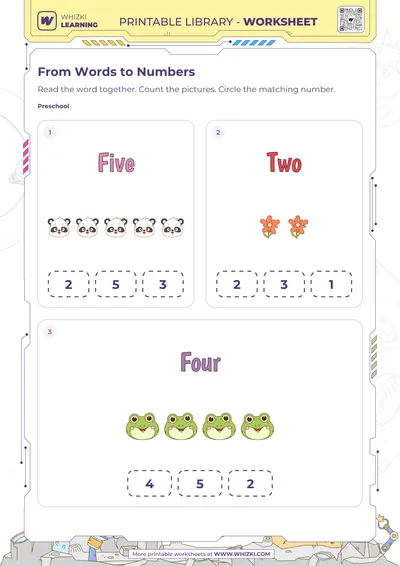
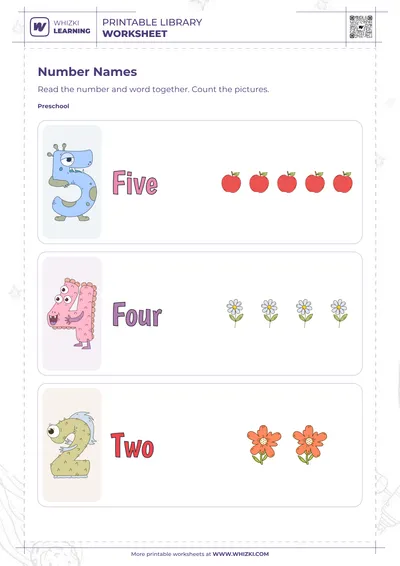
The practice works because it asks for a direct match between a written word and a math symbol. Instead of choosing from pictures or guessing from a long row of numbers, the child has to look closely at the word and produce the numeral by hand. That supports number-word recognition, numeral writing, and careful checking. For a related counting step, the circle counting and drawing worksheet gives practice counting circles and making a quantity match a number.
Keep it short and friendly. If your child gets stuck, cover the rest of the page and work on one word at a time. After finishing, point back to each answer and read it aloud together: “four, 4” and “eight, 8.” When single-digit matching feels comfortable, the tens and ones number cards worksheet is a useful next step because it shows how larger numbers can be built from tens and ones.
Boost your child’s skills with our discounted workbooks. Engaging activities for preschool, kindergarten, and grade 1 - now at special sale prices!


Fast shipping
Secure Payment
Licensed Teachers
For the planet
Printed in the USA
Helpful guides for parents and teachers, and tips for making learning at home super fun.

Picture labels can build meaning, first-sound attention, or guessing habits. Use this parent-friendly decision tree to know when to cover or reveal the picture.

A vague school screening notice can leave families guessing, so start with seven plain questions about the test, timing, language, evidence, and next steps.

A field note on the May 2026 move to one shared worksheet generator API, with a simple parent preview for print consistency and handwriting comfort.

A seven-minute apple observation helps children compare color, stem, skin, weight, smell, and a cut surface, then draw what children noticed before any craft begins.
Get exclusive activities, expert tips, and inspiration for a more meaningful, offline family life.